faine books
  • Home
  • About
  • Music Books
    • Serendipity Doo-Dah #1
    • Serendipity Doo-Dah #2
    • Ellington at the White House
    • The Best Gig in Town
  • Short Stories
    • Prisoner Chaser
    • Taxi Driver
  • Blog
  • Contact

Portrait of an LP-Era Jazz Fan: Part 1

10/29/2019

4 Comments

 
Picture
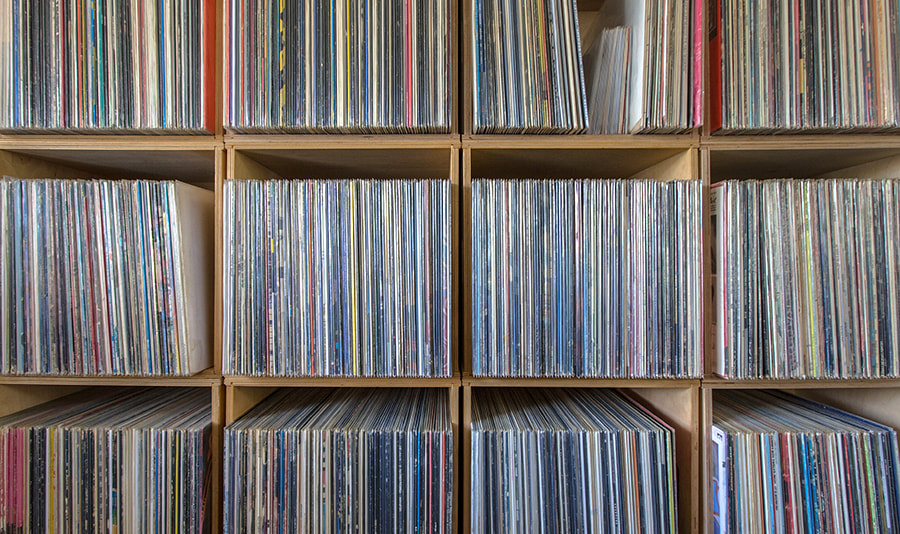
Photo credit: Adobe Stock/creativenature.nl
From 1954 to 1984, I acquired 640 jazz vinyl LPs before switching over to the more convenient CDs to stay current with the music I enjoyed most. Only recently, with the help of Mike Petillo, did I give a sense of order to my collection by arranging the LPs alphabetically by jazz artist on the online resource discogs.com.

There it was, right before my eyes, my collection history as a young man, a lot of which I had forgotten, largely because as of late, I had only sporadically selected an LP or two every so often to play. Now, thanks to discogs.com, I could take a nostalgic jazz trip down memory lane.

Of course, I remembered that I was the sort of aficionado who would fall madly in love with a particular artist’s music and then snap up every subsequent album he or she produced, whenever and wherever I could. And perhaps, not too much of a surprise, as can be seen below, Miles Davis tops the list with 29 LPs.

​Looking at the rest of the top nine, I discovered a number of—what shall we call them—experimentalists, new thing, new wave, avant-garde musicians. 

Obviously, I fell in love with the music of an eclectic mix of jazz people:

29:
23:
19:
19:
16:
15:
13:
  9:
  9:
Trumpeter Miles Davis 
Saxophonist Art Pepper 
Saxophonist Charlie Parker
Pianist Abdullah Ibrahim
Keyboardist/bandleader Sun Ra
Tenor saxophonist Archie Shepp
Trumpeter Don Cherry
Pianist/composer Andrew Hill
Art Ensemble of Chicago
​
In addition to the above top nine favorites, I greatly admired other choice artists but purchased fewer of their LPs, numbering in the 8 to 5 range as listed below:

8:

7:


6:


​5:
​
Anthony Davis, David Murray, Henry Threadgill 

Dizzy Gillespie, Wayne Shorter, Red Garland, Marion Brown, Stan Getz, Ran Blake, Charles Mingus, Roscoe Mitchell 

Modern Jazz Quartet, Arthur Blythe, Bill Evans, John Coltrane, Art Farmer, Oliver Nelson,  Don Pullen, Chico Freeman, Oliver Lake, Thelonious Monk, Mal Waldron

George Russell, Sonny Rollins, Muhal Richards Abrams, Lester Bowie, and Jack DeJohnette
​

Not every jazz enthusiast will recognize all the names above, but that would also be true for me if I checked out another person’s collection.

Based on the information above, I can see that 50 percent of my LP collection consists of multiple buys (5 and above) from 36 artists. Further, over a thirty-year period beginning in 1954, I was a fan with eclectic tastes, preferring a diverse mix of—shall we say—traditionalists (Parker, Gillespie, Pepper) and avant-garde musicians (Shepp, Art Ensemble, Pullen).

But this is not the whole story.

​What about the rest of my collection, the remaining 50 percent that consists of four, three, or fewer per artist, representing a number of singular, transcendent one-of-kind albums?

I'll examine those in my next blog.
​
4 Comments

Book Review: “Help!” by Thomas Brothers

6/30/2019

2 Comments

 
Picture
LISTEN TO PODCAST
​
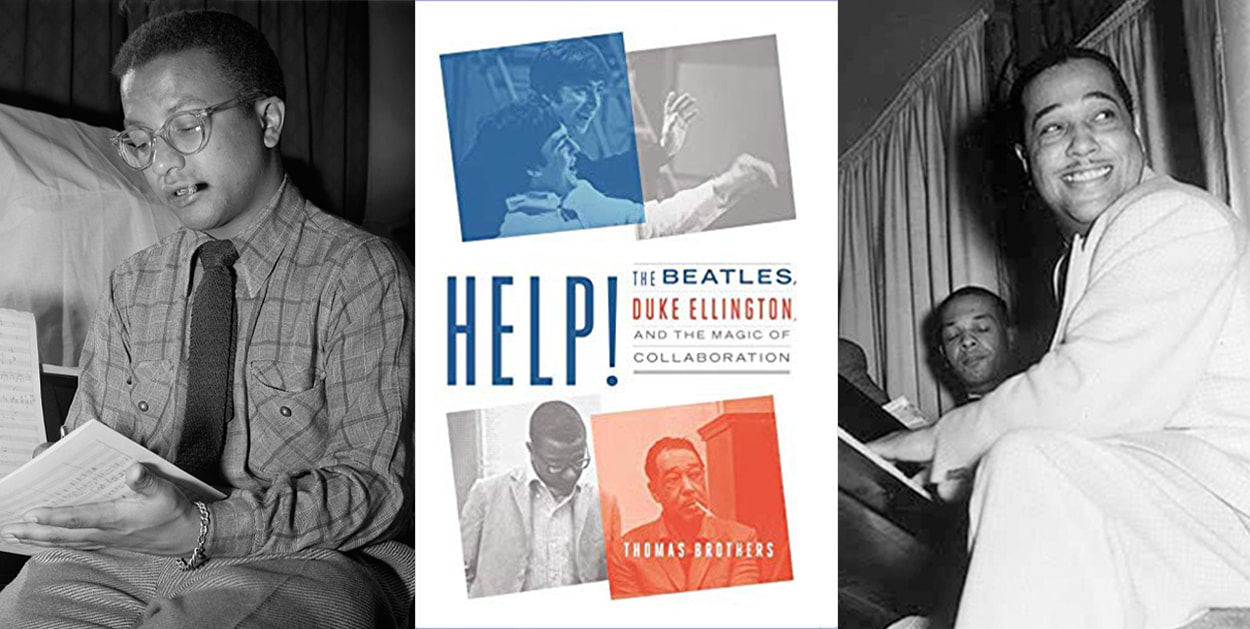
​Brothers devotes one half of his book to Ellington, the other half to the Beatles. My review concerns only the former. The author concludes the Ellington section thus:

At age twenty-seven, the failed composer discovered a new way to generate music by extending material from his soloists through framing and conceptualizing, nipping and tucking, harmonizing, and arranging and enhancing with contrast and form. . . . [He got] the best of their arranging ideas, the best of their editing, the best of their creative use of timbre, and the best of their fully framed compositions.
 
And he didn’t give them credit.

 
As Brothers documents, with but a few exceptions, Ellington did not write the songs, instrumentals, and extended pieces we associate with him—some 1,500 copyrighted pieces. He borrowed fragments or fully formed melodies from his sidemen without giving them credit.

He poached from nearly everyone in the Ellington camp, from Bubber Miley, Otto Hardwick, Barney Bigard, Johnny Hodges, Cootie Williams, Ben Webster, Rex Stewart, Juan Tizol, Lawrence Brown to Billy Strayhorn.

 
And, yes, that would mean some of your favorite songs—“In a Sentimental Mood,” “Don’t Get Around Much Anymore,” “I’m Beginning to See the Light”—and many more were written by someone other than Duke.

And that goes for your favorite instrumentals, like “East St. Louis Toodle-O,” “Black and Tan Fantasy,” and “Cotton Tail”—way too many to mention here. For the complete story, I highly recommend Mr. Brothers’s well-researched and well-written book.
 
This is not to say that Ellington never composed anything of value on his own. He did, for example, the famous three-part introduction to “Mood Indigo,” “Solitude,” and “Amad” and “Depk” in the Far East Suite, but as Brothers makes clear, Duke’s compositions were the exception to the rule. 

​In addition, according to Brothers,
​
Noncrediting was part of Ellington’s ecosystem for sustained big-band success. First, it would have cost him massive streams of revenue [from lost song royalties], and second, it would have undermined his carefully managed image as a composer-genius unique in the sprawling field of jazz.

​So why did his bandsmen all go along with it?

Security.
 
Ellington’s band was not only the most stable over those 40-plus years, but also—for most sidemen—the highest paying. Ellington’s ecosystem, as Brothers makes clear, included “giving raises and privileges to musicians who supplied their melodies, riffs, and pieces. . . . [Duke] preferred to keep the fluid dynamics of interactive creativity in the shadowy background.”
And for the most part, carping aside, his silent partners went along with it. A steady, well-paying job in a world-class orchestra was worth it.
 
The collective Ellington output remains unscathed; all that changes by the revelations in Help! is how we view Ellington. He is no longer the genius composer but the genius collaborator. Sadly, a lesser category with diminished importance and cachet than the former.
 
And it must be said, the new revelations do not tarnish in the least Ellington the conductor, pianist, talent scout, entertainer, agent, mastermind, and advocate.
 
An interesting exercise would be to assume that Ellington was the composer of every piece of music associated with his name. And then compare and rank the entire output with that of his American composer peers George Gershwin, Irving Berlin, Virgil Thomson, Jerome Kern, Cole Porter, Aaron Copland, Harold Arlen, Richard Rodgers, Hoagland Carmichael, and anybody else you would want to name.

I would rank the collective Duke at the top along with Gershwin and Rodgers.
 
As for Duke being, as is often said, jazz’s finest composer, does he now take a lesser place to Jelly Roll Morton or Fats Waller or Charles Mingus or John Lewis or anybody else?
 
All that can be said for certain, using contemporary terminology, is that Duke was CEO, COO, CFO, and President of Marketing and Public Relations of Ellington Inc. for over four decades.
 
CODA
According to Brothers, “Ellington’s career inevitably divides into two parts—before Strayhorn and after”—that is, before Strayhorn joined Ellington in 1939 and afterward.

​But there was a third part—after Strayhorn’s passing in 1967 and before Ellington’s death in 1974—a seven-year period during which the maestro produced at least three major works: The Afro-Eurasian Eclipse, Latin American Suite, and New Orleans Suite.

​Brothers did not evaluate or discuss this period, a shortcoming that could be addressed in the forthcoming paperback edition.
 
CODA CODA
It is my hope that Brothers’s in-depth look at collaboration in the Ellington realm will encourage other scholars to do the same for Duke’s peer composers mentioned above—George Gershwin, Irving Berlin, et al. Only then, can we reach a final judgment on Ellington’s compositional identity and practices.
 
To find out more about Thomas Brothers’s book Help!: The Beatles, Duke Ellington, and the Magic of Collaboration, click here.

LISTEN TO PODCAST
2 Comments

Armstrong and Ellington: Two Masters of Modernism

3/30/2019

2 Comments

 
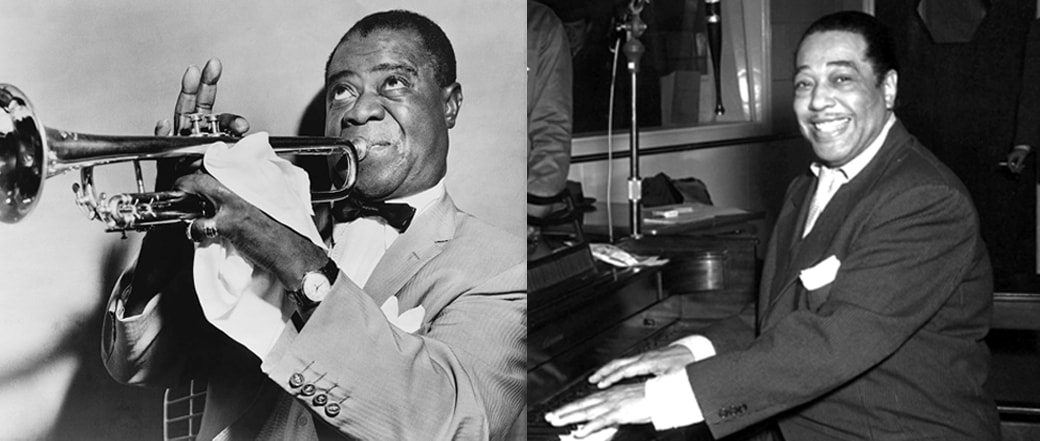
Louis Armstrong and Duke Ellington
Louis Armstrong (left, 1953) and Duke Ellington (right, 1954)
LISTEN TO PODCAST
Thomas Brothers in his biography Louis Armstrong: Master of Modernism draws an interesting parallel between two landmark jazz recordings: Armstrong’s West End Blues (1928) and Duke Ellington’s Black and Tan Fantasy (1927).

Compositionally, the two are near identical, and the Pops biographer suggests Ellington may have had a hand in West End Blues, although there is no direct evidence for such.
 
Brothers characterizes Armstrong’s West End Blues as resembling “a ‘fantasy’ or a ‘rhapsody,’ a type of piece that makes no pretense of integrating the parts into a coherent whole but, rather, offers delight in the unpredictable unfolding of different sound images, one after the other.”
 
He would have characterized Duke’s piece in the same way. Brothers further suggests (tongue in cheek, perhaps) that if Armstrong had been interested in crafting an image of himself as a composer (as Ellington certainly did), he would have named his opus West End Fantasy.
 
The structural similarity in the compositions, however, in my opinion, did not require a direct or indirect influence one way or another. It resulted from a common understanding the two composers had about the music they were creating—one with more variety and discontinuity than the unity and coherence prevalent in the then dominant Eurocentric music and one with an African foundation that came out of an American experience.
 
CODA
Armstrong would become the central figure in the history of jazz for his solo playing and singing. Ellington would become its finest composer. His musical creations often used “the unpredictable unfolding of different sound images, one after the other” to the consternation of his critics, but to the delight of his many fans.
LISTEN TO PODCAST
2 Comments

Looking Back 50 Years: Notable Jazz Albums of 1968

12/31/2018

1 Comment

 
piano keys
Photo: Adobe Stock / JB
In the Jazzman of the Year category in the December 1968 DownBeat Reader’s Poll, magazine readers singled out, in order, vibraphonist Gary Burton, trumpeter Miles Davis, composer Duke Ellington, drummer Buddy Rich, and trumpeter Don Ellis. With a few exceptions, that sounded about right.

Gary Burton

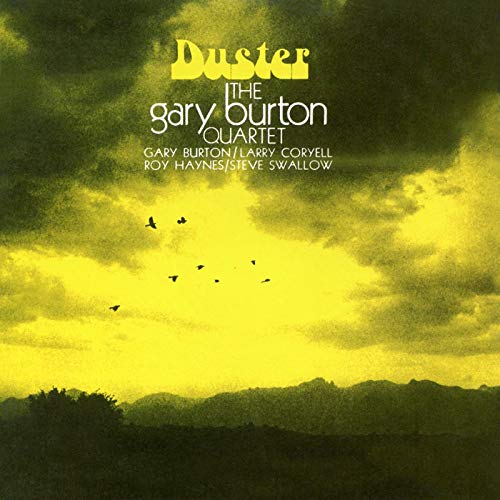
duster album
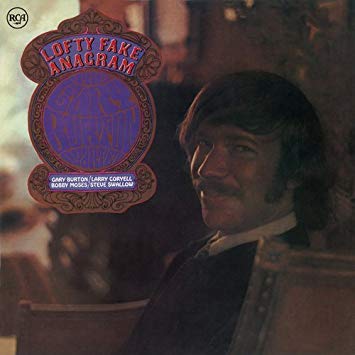
lofty fake anagram album
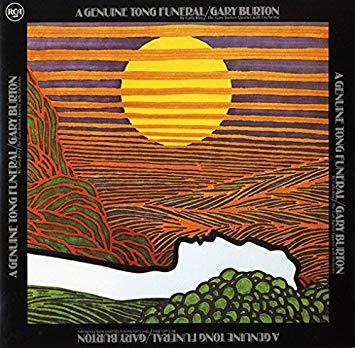
general tong funeral album
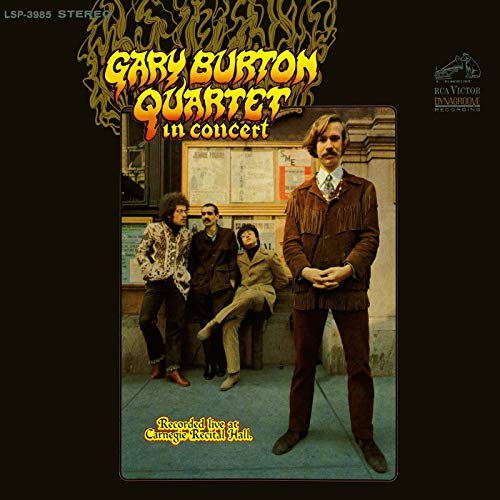
burton in concert album
Gary Burton not only represented a new voice on an instrument few in jazz opt to play, but also put forth a new concept on what he chose to play in a combo setting, as evidenced by his four albums in circulation that year: Duster (1967), Lofty Fake Anagram (1967), A General Tong Funeral (1967), and In Concert (1968). 

The vibist’s two-handed, four-mallet approach spun soft, dreamy aural chords that separated him from his forebears on the instrument: Lionel Hampton, Red Norvo, Milt Jackson, and Bobby Hutcherson. 

Conceptually, Burton chose to synthesize jazz and rock (even country at times), becoming one of the first jazz players to do so, though not as aggressively as later groups Miles Davis, Mahavishnu Orchestra, Mwandishi, Return to Forever, Lifetime, and Weather Report, giving these Johnny-come-lately outfits permission to use rock beats and distorted guitar in a jazz performance. 

The guitarist on Tong Funeral is rising star Larry Coryell. Overall, the album comes across like a soundtrack to a theatrical performance, no doubt influenced by pianist Carla Bley, who would later expand on this construct in her epic Escalator over the Hill (1971).

Miles Davis

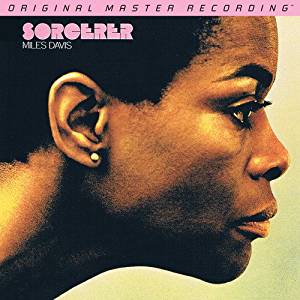
sorcerer album
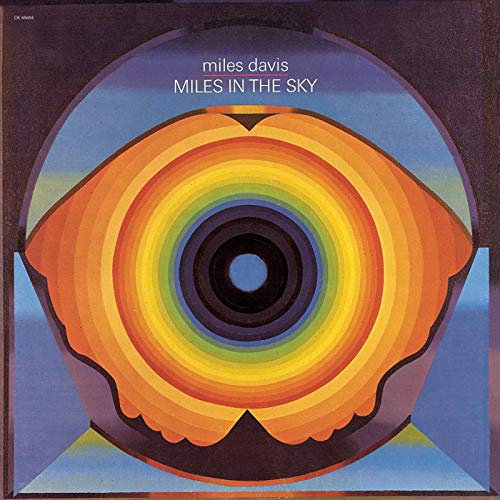
miles in the sky album
The Miles Davis Second Great Quintet—sidemen saxophonist Wayne Shorter, pianist Herbie Hancock, Bassist Ron Carter, and drummer Tony Williams—continued apace with the previous year’s stunning Miles Smiles album by releasing Sorcerer and Miles in the Sky. 

Both received top-rated reviews in DownBeat. The leader once again won top honors in the trumpet and combo categories in both the DownBeat critics and readers polls. Moreover, the trumpeter’s frontline star players also issued notable albums of their own.

Wayne Shorter

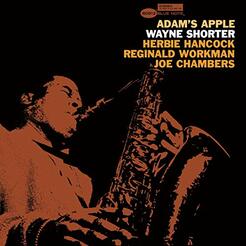
adam's apple album
​Wayne Shorter received DownBeat’s top rating for Adam’s Apple, a quartet effort backed by his totally telepathic and adventurous piano partner, Herbie Hancock, along with bass and drums. The album is known for its compositions—“El Gaucho,” for example—but especially for the jazz standard “Footprints.” 

With this release, the idea began to build in the jazz community that Shorter was much more than a soloist—indeed, a composer of merit likely to join the ranks of John Lewis, Charles Mingus, and Duke Ellington.


Herbie Hancock

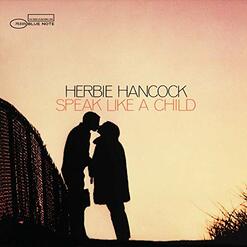
speak like a child album
​Herbie Hancock’s Speak Like a Child, an experimental, slithery abstract combining of flugelhorn (Thad Jones), bass trombone (Peter Phillips), and alto (Jerry Dodgion), did not move the needle at the time. 

Today, however, this album with its interesting, simple melody sound clouds has gained an appreciative audience. Another way to put it: Miles Davis had his Birth of the Cool, and Herbie had his Speak Like a Child.


Duke Ellington

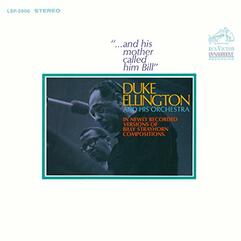
and his mother called him bill album
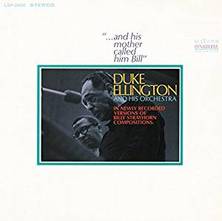
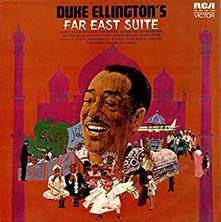
​Duke Ellington and his orchestra followed their 1967 outstanding Far East Suite with a homage to Duke’s composing and arranging partner Billy Strayhorn: And His Mother Called Him Bill. 

Far East Suite is my number one favorite, And His Mother, featuring all Strayhorn tunes, is my number two. In my opinion, Duke’s mid-1960s band is the equal of the maestro’s famed late ’30s/early ’40s Webster-Blanton band and deserves a name unto itself. Perhaps Ellington’s Second Testament band? Nope, that name’s taken by the Basie aggregation.
 
The reason why it’s so difficult to come up with a proper moniker is that it had not one or two but numerous outstanding soloists at or near their peak: Paul Gonsalves (tenor), Johnny Hodges (alto), Harry Carney (baritone), Jimmy Hamilton (clarinet), Cootie Williams (trumpet), Rufus Jones (drums), and, of course, Duke Ellington (piano). Band nickname aside, And His Mother is the Ellington ’60s band at its peak—the same could be said for altoist Johnny Hodges.
 
As Nelson Riddle was to Frank Sinatra and as Lester Young was to Billy Holiday, Billy Strayhorn was to Johnny Hodges. Stray’s compositions brought out that special, sensuous Hodges sound. As singer/author Lillian Terry recently put in her book Dizzy, Duke, Brother Ray, and Friends, “Heavens, when he blows those long, languid notes . . . it’s an actual caress!” 

Yes—as on Hodges’s tribute to Strayhorn on “Blood Count,” “After All,” and “Day Dream,” the latter a late-at-night, sob-in-your beer favorite. The flip side of the Hodges coin—the bluesy side—Billy knew all too well, as illustrated on “Snibor,” “The Intimacy of the Blues,” and “Acht O’Clock Rock.”


Buddy Rich

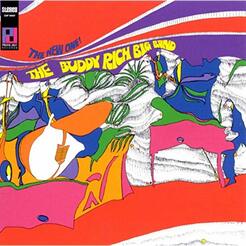
the new one album
​Buddy Rich and his big band remained hot throughout the year with both the jazz public and DownBeat readers, who awarded the drummer a second place finish in the Album of the Year category for his appropriately titled The New One.


Don Ellis

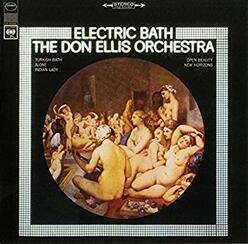
don ellis electric bath album
​Riding high on his 1967 breakout year, Don Ellis received 1968 Album of the Year honors for Electric Bath from DownBeat readers. Critic Harvey Siders, who awarded the album five stars, described Ellis’s chart for his orchestra as nervous, frenetic, and exciting—unconventional meter, the acoustic incense of Eastern rhythms added by “now” twang of sitars, tape loop delays, and sometimes abrasive clash of quarter tones. 

Other critics heard it differently and did not characterize the band as exciting. Magazine subscribers sided with Siders.


Rahsan Roland Kirk

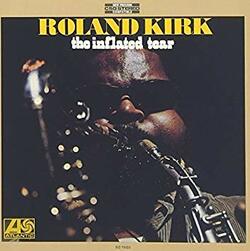
inflated tear album
​Multi-instrumentalist Rahsan Roland Kirk—tenor saxophone, manzello, stritch, flute, and other assorted instruments, like the oboe played individually or two or three at a time—released The Inflated Tear, another energetic carnival of sound, and one of his best albums of the ’60s.


John Coltrane

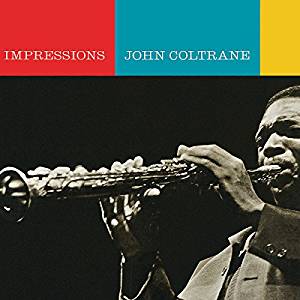
impressions album
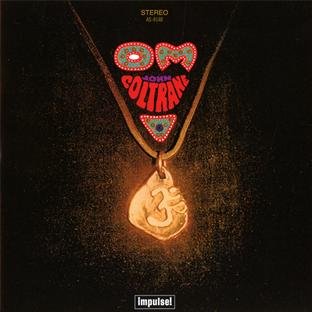
om album
​John Coltrane, who passed in 1967, took his place in the upper echelons of jazz immortals, alongside Coleman Hawkins, Lester Young, and Charlie Parker. 

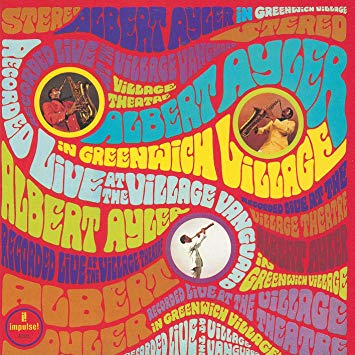
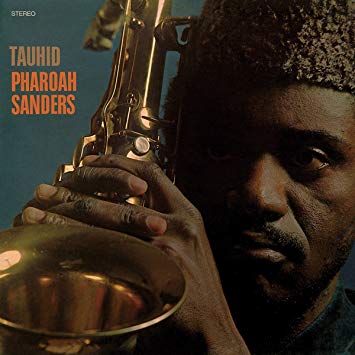
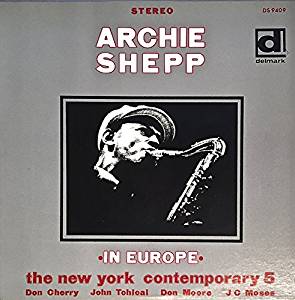
Two of Coltrane’s albums, the now classic Impressions and Om, were reviewed in DownBeat in 1968; the former received five stars, the latter four. The torchbearers, the tenor men closest to him stylistically and personally, forged ahead with new albums: Albert Ayler (In Greenwich Village), Pharoah Sanders (Tauhid), and Archie Shepp (In Europe). ​
in greenwich village album
in europe album

Aretha Franklin

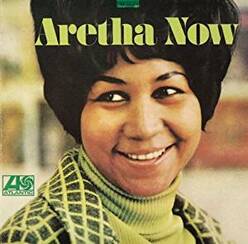
Aretha Now album
​Lastly, singer Aretha Franklin passed in August of 2018. Fifty years ago, DownBeat published a feature article on Aretha. In its Reader Poll issue, the Queen of Soul finished second to the one and only Ella Fitzgerald in the female singer category. For a magazine primarily focused on jazz, this was high praise indeed.

In my book Serendipity Doo-Dah Book One, I included a short piece on Ms. Franklin, covering her rise to prominence when she switched to Atlantic Records in 1967 and her recovery from her mid-career slump in 1977. Read it here.

1 Comment

That Anniversary Year 2018: Celebrating Four Jazz Centenarians

12/19/2018

2 Comments

 
old piano
Photo: Adobe Stock / Dmitriy Shipilov

The 100th anniversary birthday calendar for this year is chock a block with 18 total centenarians, oldest to youngest as follows:

Money Johnson, Marian McPartland, Sir Charles Thompson, Howard McGee, Sam Donahue, Peanuts Hucko, Hank Jones, Rusty Dedrick, Eddie Jefferson, Arnett Cobb, Ike Quebec, Jimmy Rowles, Gerald Wilson, Tommy Potter, Jimmy Blanton, Bobby Troup, Joe Williams, and Jimmy Jones. (1)

I will single out four, each with a Duke Ellington connection, three of whom performed at the White House tribute to Duke Ellington on his 70th birthday on April 29, 1969.


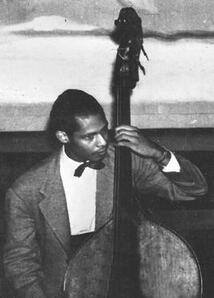
Jimmy Blanton

Jimmy Blanton
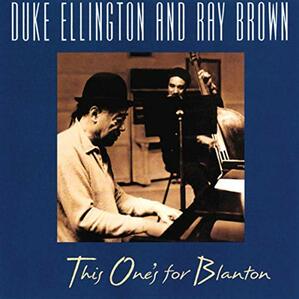
Duke Ellington and Ray Brown album
Jimmy Blanton, who was just 21 when he joined Duke in 1939, was the first modern bassist. He had a big tone and unshakable time and was the first jazz bassist capable of “melodic” improvising. Blanton stayed with the band until late 1941 (he died in 1942).

In that brief time, according to Whitney Balliett,

Ellington starred Blanton and his instrument in concerti like “Jack the Bear” and “Bojangles” . . . as well as the highly unconventional duets that he recorded with Blanton—“Pitter Panther Patter,” “Mr. J.B. Blues” . . . his big tone and easy, generous melodic lines mov[ing] like rivers through every record they did together . . . His phrasing was spare and his silences were as important as his notes. He adopted a hornlike approach to his instrument—that is, he no longer just “walked” four beats to the bar but also played little melodies . . . Blanton’s accompanying was forceful; he pushed the band and its soloists by playing a fraction ahead of the beat . . . which lifted the band and made it swing. (2)

Now known as the Blanton-Webster band, Ellington’s orchestra of 1939–1941 is thought by many to be his best ever.


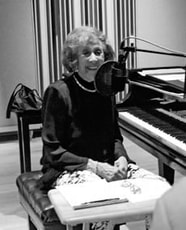
Marian McPartland

Marian McPartland
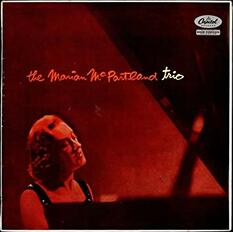
Marian McPartland Trio album
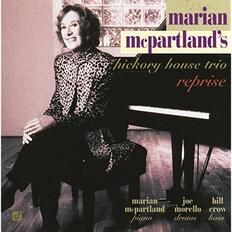
Hickory House Trio album
Newly married to trumpeter Jimmy McPartland and freshly settled in the US from Great Britain, the aspiring jazz pianist acquired her first gig at the Embers nightclub in New York City. As scary as that was for the British expat, it was but a prelude to her opening at the 52nd Street Hickory House steakhouse in 1952, affording her the opportunity to mingle and play piano for numerous jazz greats—to both learn from them and gradually gain their acceptance.

One of the first reviews she received as a jazz pianist at the Hickory House was by Leonard Feather in DownBeat magazine: “Marian McPartland has three strikes against her, she’s English, white, and a woman.” (3) Ten years hence, by the time her trio’s weekly stint at the Hickory was over, Marian had gained a measure of respect for her talents.

Her career for the next 10 or so years or so continued apace, performing at concerts and clubs, traveling extensively, and making one or two records every year.

Marian is probably best known for her Piano Jazz radio show that aired on NPR starting in 1978, where she interviewed and performed with hundreds of jazz (and some pop) singers, pianists, and other instrumentalists, continuously for 23 years. It won the coveted Peabody Award in 1984, the ASCAP–Deems Taylor Award in 1991, the New York Festivals Gold World Medal in 1988, and the Gracie Allan Award in 2001, presented by the Foundation of American Women in Radio and Television.

McPartland was named a Jazz Master by the National Endowment for the Arts (NEA), received a Lifetime Achievement Award from DownBeat magazine, and a Mary Lou Williams Women in Jazz Award. (4)

Not too shabby for a white English woman, eh, Mr. Leonard Feather?
    
As a lifelong admirer and friend of Duke Ellington, Marian was a shoo-in to be invited to perform at the maestro’s White House tribute on April 29, 1969. The Nixon administration went out of their way to make sure she did. They provided a limousine to shuttle her between the White House and her gig at nearby Blues Alley in Georgetown, managing to get her to the East Room in time for the late night jam session after the all-star band concert.

Duke greeted his Hickory House friend upon her arrival, and, fearing Willie “the Lion” Smith would monopolize the keyboard all night long, Duke urged Marian to take her turn at the grand piano. Once she was on the riser, the Lion said to her, “I suppose you want to play.”

“Yeah, I’d like to,” Marian responded, moving in a little.

“Okay,” Willie said as he walked off in a sulk. Ellington stood nearby chuckling to himself.

After a decent interval at the keys, McPartland zipped back to Blues Alley, where she greeted her guests with, “Sorry I’m late. I’m also doubling at the White House.” (5)
​

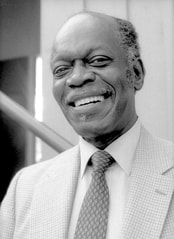
Hank Jones

Hank Jones
Village Vanguard album
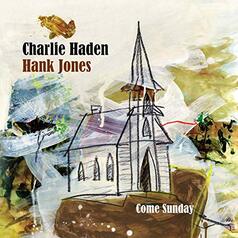
Come Sunday album
A member of the famous jazz family that includes brothers Thad (cornet) and Elvin (drums), Hank Jones grew up listening to virtuoso pianists Earl Hines, Fats Waller, and Art Tatum. But like so many of his generation, Hank embraced the bebop style in the 1940s, though perhaps less so than his contemporaries.

From there, he became a Jazz at the Philharmonic mainstay (1940s), an accompanist for singers like Ella Fitzgerald (1950s), a CBS staff musician in New York City (1960s–70s), and the pianist on a thousand and one record dates. By then, his style had coalesced

Unlike most modern pianists, Jones constantly uses his left hand, issuing a carpet of tenths, little offbeat clusters, and occasional patches of stride. Jones’ solos judge, and they rest far above the florid, Gothic roil that many jazz pianist have fallen into. (6)

But his velvet-touch, cloudlike chords that seem to drift one into the other are what linger in the mind long after he has finished playing. He remains preeminent among the “soft touch” pianists to whom he could be compared: George Shearing, Marian McPartland, and Bill Evans.

From the 1970s on, although Jones freelanced as before, he became widely regarded as the dean of jazz pianists through his recordings in the trio format—for example, Great Jazz Trio with bassist Ron Carter and drummer Tony Williams—and his duos with pianists Tommy Flanagan and John Lewis, bassist Charlie Haden, and guitarist Bill Frisell.

His rise in stature is evidenced, in part, by his NEA Jazz Master Award in 1989, his 19th-place finish in Gene Rizzo’s book The Fifty Greatest Jazz Piano Players of All Time (Hal Leonard, 2005), and his career-topping National Medal of Arts award bestowed by President George H. W. Bush in 2008. (7)

Along with guitarist Jim Hall, bassist Milt Hinton, and drummer Louis Bellson, Hank was a member of the all-star rhythm section that backed the all-star front line at Duke Ellington’s 70th-birthday celebration at the White House: trombonists Urbie Green (“I Got It Bad and That Ain’t Good) and J. J. Johnson (“Satin Doll”), altoist Paul Desmond (“Chelsea Bridge”), baritone saxophonist Gerry Mulligan (“Sophisticated Lady”), trumpeters Bill Berry and Clarke Terry (“Just Squeeze Me”), and the whole band on a raft of Ellington tunes.

No solos for Hank. Nonetheless, the pianist chorded the patented opening vamp Duke had crafted many years before on “Satin Doll,” and the East Room crowd reacted immediately—they knew what was coming—and trombonist Johnson delivered the familiar melody. (8)
​ 

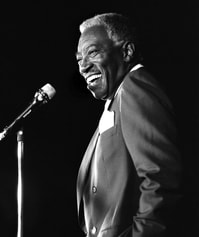
Joe Williams

Joe Williams
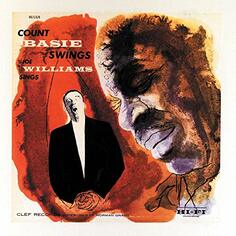
Count Basie and Joe Williams album
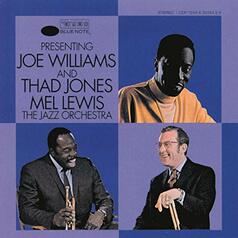
Presenting Joe Williams album
His versatile baritone voice made Joe Williams one of the signature male vocalists in jazz annals, responsible for some of the Count Basie band’s main hits in the 1950s: “Alright, Okay, You Win,” “The Comeback,” and what would become one of his most requested tunes, “Every Day.” The classic Count Basie Swings and Joe Williams Sings (Verve) album from that period was ranked 17th all-time favorite jazz vocal album by jazz singers in a DownBeat magazine June 2004 poll.

Starting in the 1960s, Williams was a vocal soloist fronting various piano trios. He continued to expand his range, becoming a superior crooner and exhibiting a real depth of feeling on ballads. Recognition of this growth came in 1974 when Joe won DownBeat’s Critics Poll as best male vocalist—winning nearly every year thereafter for more than a decade. His stature as a polished and complete singer came in 1993 when he received the NEA Jazz Master Award. (9)

At the Ellington White House tribute, Joe sang three songs backed by the all-star band, starting with “Come Sunday,” which Gary Giddins has rightly crowned the Duke’s supreme contribution to the American hymnal. The spiritual theme was first introduced in 1943 at Carnegie Hall in Black, Brown, and Beige, Ellington’s first voyage into extended composition.

Williams loved singing Ellington songs and included at least one in nearly every performance. In his repertoire for some time, he sang “Sunday” at an earlier Ellington tribute in the summer of 1963 in New York City and again on record in 1966: Presenting Joe Williams: Tad Jones/Mel Lewis (Blue Note).  

Mahalia Jackson’s rendering of this lovely hymn is unsurpassed. But on the male side of the ledger, no one has come close to matching the depth and poignancy that Williams has lent to the song. One of the critics in attendance the night of the tribute, Leonard Feather, characterized Joe’s version as “deeply moving.” Critic Morgenstern concluded, “Williams [is] singing as movingly as I’ve ever heard him.”

William’s brought the same amount of conviction and richness to “Heritage,” also known as “My Mother, My Father” as he did to “Come Sunday.” He sang slowly and thoughtfully, with the feel of an elegy. According to Doug Ramsey, there wasn’t a dry eye in the East Room when he finished.

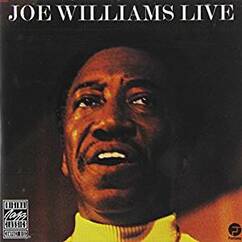
Joe Williams Live album
As with “Come Sunday,” Williams would revisit “Heritage” in a studio date for Fantasy Records accompanied by the Cannonball Adderley Quintet (Joe Williams Live) and again, memorably so, at Duke’s funeral on Memorial Day 1974.

A swinger from the satirical musical of 1941 of the same name, “Jump for Joy” closed out the All-Star band concert in truly joyous fashion. Joe’s caramel baritone perfectly enveloped the song’s gospel ardor and secular esprit. He had previously recorded “Jump” in 1963, and must have sung the song a hundred times after that 1963 studio date.

Whether it was this past familiarity with the tune, or Joe’s and the band’s sensing the concert finish line, Joe was out front but still solidly “in the pocket” for an all-out swinging climax to the concert. (10)


NOTES

  1. Jazz Birthday Calendar, 1918.
  2. Whitney Balliett, Collected Works: A Journal of Jazz 1954–2001 (New York, St. Martin’s Griffin, 2002), 478–79.
  3. Marian McPartland, Marian McPartland’s Jazz World: All in Good Time (Chicago: University of Illinois Press, 2003), 1.
  4. Ibid., 166.
  5. Edward Allan Faine, Ellington at the White House, 1969 (Takoma Park, MD: IM Press, 2013), 138.
  6. Balliett, Collected Works, 837.
  7. Faine, Ellington, 60.
  8. Ibid., 93–133.
  9. Ibid., 66–67.
  10. Ibid., 126–30.
2 Comments

Faine Favorites: Top 10 Alto Sax Albums

8/31/2018

5 Comments

 
Alto Saxophone
For your consideration, here are my Top 10 alto saxophonist albums and a few runner-ups. Ranking tends to vary, depending on the day of the week, weather, and mood.


Carlos Ward African Brazilian
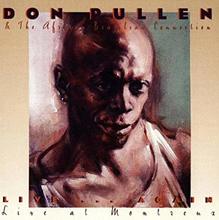
1A. Carlos Ward | Don Pullen & the African Brazilian Connection Live Again

The perfect showcase for a much neglected saxophonist with a slightly rough edge, capable of playing inside and outside but always melodically and rhythmically centered, as on the five lengthy numbers here (average length 14 minutes). Includes a ballad and an infectious, impossible-to-ignore “Get up and Dance.” Great band!

Carlos Ward Live at Sweet Basil
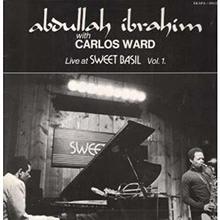
1B. Carlos Ward | Abdullah Ibrahim and Carlos Ward, Live at Sweet Basil, Volume 1

Pianist Ibrahim’s album, nonetheless Ward shines on three tracks, two of which are classic—the gorgeously mellifluous “For Coltrane” that someone should put words to and the hand-clapping “Soweto,” where the altoist pulls out the stops, sweeping from the depths of his instrument to the top and back again in a perfectly constructed improvisation.


Art of Pepper Album
2A. Art Pepper | The Art of Pepper

“Begin the Beguine” opens with a staccato Latin vamp, which quickly segues into a soaring, up-tempo reading of the familiar theme. Pepper’s alto flight is elevated, above the clouds, magisterial, turning the Cole Porter pop song into an anthem. The tune closes with a return to the opening vamp with Pepper over-blowing some notes for effect.

Art Pepper Winter Moon
2B. Art Pepper | Winter Moon

Pepper’s urging, pleading, aching alto sound over a lush orchestral cushion on “Our Song” is gut-wrenching. In a Pepper documentary, there is a hotel room scene where he and his wife Laurie are shown rapturously listening to the cut on a portable record player. At the conclusion, Pepper looks up at the camera and mutters, “If you don’t like this, you don’t like music. It doesn’t get any better than this.” I agree.


Cannonball Adderly Quintet San Francisco
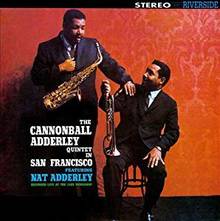
3A. Cannonball Adderly | The Cannonball Adderley Quintet in San Francisco featuring Nat Adderley

Cannonball’s swooping, high-flying birdlike (as in Charlie Parker) alto paired with brother Nat’s trumpet put soul jazz on the map with this intense but rocking album. Surprisingly for jazz, it received significant radio and jukebox play.

Pianist Bobby Timmon’s 12-minute jazz waltz “This Here” (pronounced “Dish Heah” by Cannon) set the pace, the pianists full-fingered driving solo is classic, and the leader’s uncompromisingly rowdy excursions on alto are equally memorable. Two other lengthy tracks bear mention: “Randy Weston’s “Hi-Fly” and “Spontaneous Combustion,” the latter offering a crowd-pleasing sax/trumpet chase.


Cannonball Adderley Them Dirty Blues
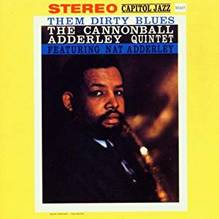
3B. Cannonball Adderley |Them Dirty Blues: The Cannonball Adderley Quintet featuring Nat Adderley

A spirited outing by the Adderley soul brothers featuring two more soul standards: “Work Song,” written by Nat, and “Dat Dere” by Bobby Timmons. The latter showcases another Timmons-patented two-handed, block-chorded, gospelish solo, reminiscent of his “This Here” masterpiece on In San Francisco.

On “Work Song,” pianist Barry Harris does the keyboard honors, matching Timmons and then some. Interestingly, lyrics were set to both tunes that have contributed to their continued popularity. Oscar Brown Jr. had a minor hit with “Dat Dere.” The surprise on this album is the straight-ahead and swinging “Jeannine,” a wonderfully surging flowing number buoyed by Kansas City style “bop bop boop boop” riffing behind the soloists. On this album, like the former, Cannon pursues his aggressive, take-no-prisoners approach without sacrificing accessibility.


Picture
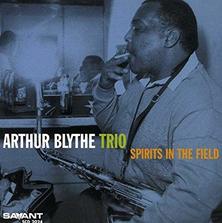
4. Arthur Blythe | Spirits in the Field: Arthur Blythe Trio with Bob Stewart Cecil Brooks III

After a splashy breakout (In Concert, 1977) LP and several smash Columbia albums, Arthur’s career seemingly nosedived (especially with critics) when Columbia canceled his contract in the early 1980s. Yet his sound remains one of the most recognizable in jazz and one that appeals to both mainstream and avant-garde tastes, as can be heard on the 2000 offering Spirits in the Field.

Blythe’s themes are melodious and memorable, his twining inside and outside solos always songful. As Francis Davis recounts in the liner notes, “No matter how complex his improvisations may be harmonically, they are based on the simplest of devices—rhythmic figures, riffs, fragments of melody—and there is an inevitably to them.”

His sound at times approximates a hip R&B player (as on “One Mint Julep” and “Break Tune #2”), a tender balladeer (“Ah George, We Hardly Knew You,” “Spirits in the Field”), an Eastern muezzin (“Odessa”), or the leader of a ceremonial New Orleans band (“Lenox Avenue Breakdown”). The interaction between Blythe’s alto and Bob Stewart’s tuba is unparalleled—nothing comparable to it in all of jazz.


John Handy Live at Monterey
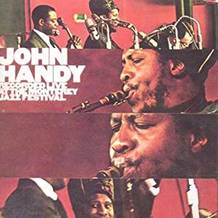
5. John Handy | John Handy Recorded Live at Monterey Jazz Festival

A standout live performance by altoist John Handy and his unusual group: violin (Mike White), guitar (Jerry Hahn), bass (Don Thompson) and drums (Terry Clark). It’s hard to say why this music is still so fresh and mesmerizing. It was novel, for sure—violin and alto, and guitar—but, hey, this was the mid-’60s—novelty had been in vogue since the late ’50s.

Sounded wonderfully alien to me, peculiar jazz harmonies, some said, yet grounded in familiar jazz rhythms. Hard driving with group cohesiveness at its core, this was a memorable one-of-a-kind performance.


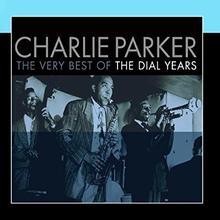
Charlie Parker Dial Years
6. Charlie Parker | Charlie Parker: The Very Best of the Dial Years

Whether it’s the “complete” or “best of” Dial Years doesn’t matter—in either case, this is where it all began for alto players of the past 70 years. The Big Bang, if you will.

It’s all here, the bop anthems (“Yardbird Suite,” “Ornithology,” “Bird of Paradise,” “Scrapple from the Apple,” and “Chasin’ the Bird”), the up-tempo rompers (“Bebop,” “Crazeology,” and “Donna Lee”), and the ballads (“Lover Man,” “Embraceable You,” “My Old Flame,” “Out of Nowhere,” and “Don’t Blame Me”). The latter to me are the most revealing of Parker’s talent, his innate melodic and harmonic sense, and his improvisatory grace.

Back in the day when Charlie Parker and Bebop first hit the scene and well-loved ballads were played, people asked, “Where’s the melody?” The answer then as now is, “In Parker’s head.” The familiar song’s melody and harmonic structure served as the “basis” for his newly created improvisations, for better or worse. You decide. Sit back, relax, and listen to the ease at which Charlie Parker spins his golden threads.


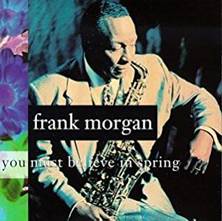
Frank Morgan Believe in Spring
7. Frank Morgan | You Must Believe in Spring

Morgan found his most expressive alto voice late in life: a refined, reflective, thoughtful voice, a mite thin at times, though always emotional. No better way to acquaint yourself with this tuneful improviser than on “Spring,” where he pairs with world-class pianists (Kenny Baron, Tommy Flanagan, Roland Hanna, Barry Harris, and Hank Jones). His duo with Hanna on the pianist’s tune “Enigma” is simply gorgeous.


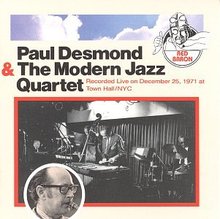
Paul Desmond Modern Jazz Quartet
8A. Paul Desmond | Paul Desmond and the Modern Jazz Quartet in 1979 at Carnegie Hall

Desmond paired up with the venerable MJQ for a Christmas Eve concert. While the album overall is uneven, Desmond’s solo on the traditional “Greensleeves” is simply glorious, reminding me, at least, as to why the classic Brubeck Quartet was so successful.


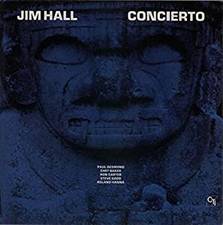
Paul Desmond Concierto
8B. Paul Desmond | Concierto

Desmond appears in this all-star lineup to pay homage to one of the most beautiful melodies in all of music: the adagio from “Concierto de Aranjuez” by Joaquin Rodrigo.

The sextet renders the melody with respect before sequential solos by trumpeter Chet Baker, pianist Roland Hanna, and guitarist Hall.

Unexpectedly, Desmond enters with a piercing restatement of the theme. By piercing, I mean a take-your-breath away, cold-wind-off-Lake-Michigan piercing. Desmond’s alto voice—often depicted as the sound of a dry martini—is a chilled margarita in this instance.


Johnny Hodges Duke Ellington Album
9A.  Johnny Hodges | Duke Ellington . . . And His Mother Called Him Bill

As Nelson Riddle was to Frank Sinatra, as Lester Young was to Billy Holiday, Billy Strayhorn was to Johnny Hodges. Stray’s compositions brought out that special, sensuous Hodges sound. Singer Lillian Terry recently put it this way: “Heavens, when he blows those long, languid notes . . . it’s an actual caress.”

As here, on Ellington’s tribute to Strayhorn “Blood Count,” “After All,” and “Day Dream,” the latter a late-at-night, sob-in-your beer favorite. The flip side of the Hodges coin—the bluesy side—Billy knew all too well, as illustrated on “Snibor,” “The Intimacy of the Blues,” and “Acht O’Clock Rock.”


Ellington Far East Suite
9B.  Johnny Hodges | Duke Ellington’s Far East Suite

The two sides of Hodges are again on display. “Isfahan,” according to Cook and Morton “is arguably the most beautiful single item in Ellington’s and Strayhorn’s entire output.” And I agree. Hodge’s stiletto-sharp, crystalline pure sound slows the breath, wells the eyes, and stills the body while Ellington’s orchestra puffs occasional sound pontoons to keep the alto’s melodic line afloat. If perfection needed a definition, it can be found here.

If “Isfahan” brings a tear to your eye, then “Blue Pepper” will bring a smile to your face. The band starts out rocking with a simple repetitive sing-songy melody atop a churning, rock-and-roll drum rhythm by Speedy Jones. This eastern-tinged melody gives way to the flip side of the Hodges coin, in this instance a solo of clipped, start-and-stop notes that suggests rather than delineates. In other words, a near parody of a typical Hodges blues solo. And it works!


Gary Bartz Known Rivers Album
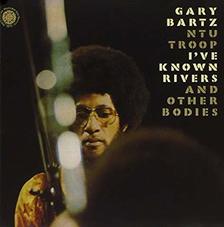
10. Gary Bartz | Gary Bartz NTU Troop I’ve Known Rivers and Other Bodies

Overall, three of the 11 tracks—the funky, toe-tapping ”Don’t Fight the Feeling,” “Dr. Follow’s Dance,” and the melodically pleasing “Peace and Love”—are outstanding, while the Langston Hughes poem “I’ve Known Rivers,” set to music and sung by Bartz, is a classic. This anthemic song features not only the saxophonist’s best singing on the album, but his best alto solo as well. Elementary school teachers could find Bartz’s reading useful in teaching the Hughes poem to students.


Apologies to Ornette Coleman, Jackie McClean, Henry Threadgill, Marian Brown and Phil Woods. You’re in my second Top 10.

What are your top alto sax albums? Please leave a comment below.


5 Comments

Book Review: Duke: A Life of Duke Ellington

4/26/2018

2 Comments

 
Picture
LISTEN TO PODCAST
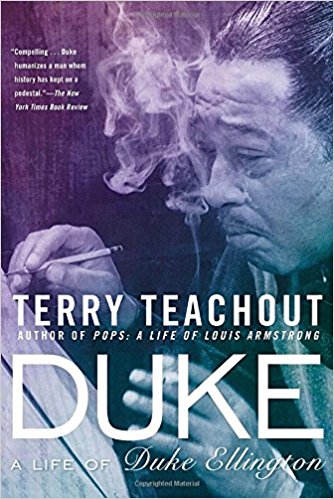
In Ellington at the White House, 1969, I tender the view that Duke Ellington is America’s premier composer, not just the greatest jazz composer, a consensus view if there ever was one, but the greatest composer of any kind in the history of American music.

Along comes critic Terry Teachout in his book Duke: A Life of Duke Ellington to challenge the absolute greatest view and raise the question of Ellington’s overall standing in the ranks of 20th-century American composers.

Teachout takes aim at the maestro’s songs, as well as his longer and larger works: the concertos, suites, and programmatic pieces.

Regarding songs, his major objection has nothing to do with form, but with process—the fact that Ellington “poached” (his word) key strains, melodies (“licks”) from his own orchestra members, oftentimes not sharing songwriter credits with them.

And why did Duke do this? Not because he had the talent to recognize a good melody when he heard one, but because, as the Wall Street Journal critic implies, he was incapable of coming up with a good tune all by himself, simply not a “melodist.” In other words, Duke stockpiled other people’s melodies, much like comedian Milton Berle stockpiled other people’s jokes.

True, the inspiration of many Ellington songs came from others. Hence, according to Teachout, Ellington is a collaborative composer, a qualification that detracts from his status in comparison with other composers.

Here is the rub: For this re-categorization to hold, we can’t consider Ellington in isolation. We know a lot about the musical Ellington, but what about other composers? Where did they get their inspiration? From whom did they poach? And who did they collaborate with? Certainly with their lyricists, orchestrators, show directors, and producers. But to what extent?

Did George Gershwin and Richard Rodgers seclude themselves in underground, soundless caves, only to later emerge with their conjured musical phrases etched on stone tablets? Of course not.

To one degree or another, their melodies reflected aspects of the world around them in collaboration with other human beings. The process by which their tunes came about may not be as well known as Ellington’s. But it cannot be assumed that they did not draw from sources outside themselves. Teachout’s charge of radical Ellington collaboration is overblown.

I believe it is the maestro’s larger and longer works that separate him from most (if not all) of his fellow composers. Here, our intrepid critic is downright skeptical, dismissing Ellington’s early large-scale works Creole Rhapsody, Symphony in Black, Reminiscing in Tempo, Black, Brown and Beige, and Diminuendo and Crescendo in Blue as inferior; referring to his theatrical efforts Jump for Joy, Beggar’s Holiday, A Drum Is a Woman, and My People as second-rate or worse; categorizing his late-career suites Such Sweet Thunder, Far East Suite, Latin American Suite, and the Afro-Eurasian Eclipse as no more than fitfully inspired, with few solos interesting enough to justify their length; and eschewing Ellington’s Sacred Concerts as lacking memorable themes.

Over the years, as Teachout documents, music critics have slammed Ellington’s masterworks as formless and shallow, aimless, less than unified, slight, not good enough, pretentious, and patchwork, as well as lacking indelible melodies, harmonic direction, and structural cohesion.

Teachout drags out all the disparaging remarks, and by not challenging them, the assumption can be drawn that he is endorsing them.

When the critics are not characterizing the maestro’s music as “floor show music for tourists,” they target his “mosaic” method of composition, which they see as a string of unrelated cameos, especially not suited for large-scale works bearing the name concerto or suite.

Teachout also singles out the mosaic composer’s penchant for falsifying true inspirations for songs and taking preexisting compositions and shoehorning them into fresh thematic works. It matters little at this remove that “Harlem Air Shaft” had nothing to do with life in a Harlem apartment, or that “The Star-Crossed Lovers” on Such Sweet Thunder had nothing to do with Shakespeare’s plays, or that “Isfahan,” on the Far East Suite, was originally named “Elf” before the orchestra even toured the Far East.

All this inside baseball stuff is interesting, but it doesn’t matter when you listen to Ellington’s music in 2018.

In conclusion, Teachout says, “The majority of Ellington’s critics agree that he was at his best in the forties,” and then quotes composer/conductor Gunther Schuller: “[Duke] never really understood the nature of the problem he was facing in undertaking to write in larger forms.”

Then Teachout states, “It is a verdict in which most scholars concur, though it does not diminish his stature in the least.”

Oh, yes it does, Mr. Teachout.

You may say Duke is still one of the greatest of composers of any kind in the history of American music, but by letting all the trash talk stand without challenging it one bit, it does diminish his stature.

Could anyone who has read your book, taken your conclusions at face value ever honestly believe that Ellington is America’s premier composer, outranking his Great American Songbook peers Harold Arlen, Irving Berlin, Hoagland Carmichael, George Gershwin, Jerome Kern, Cole Porter, and Richard Rodgers, among others? To say nothing of Eurocentric American composers like Aaron Copland or Charles Ives?

Could those readers believe that Duke even belongs in that elite Songbook group?

CODA
Numerous books have been written about the Great American Songbook composers, individually and collectively. None of these books has attempted to rank the various composers, perhaps out of respect for the individuals involved. Nonetheless, isn’t it about time for someone to conduct such a study involving a large number of experts? It would be welcomed, that’s for sure.

A model for such exists. Ten years ago, Hal Leonard published The Fifty Greatest Jazz Piano Players: Ranking, Analysis & Photos by Gene Rizzo. Setting aside both major and minor quibbles with that effort, the book remains a valuable reference. While open for debate, the number of composers considered should be less than 50, preferably less than 15.

The biggest hurdle to overcome is the number of experts and their identity (and secondarily, a funding mechanism for such an endeavor).

So who do you think is the greatest American composer? And who are the top 15? And why?
LISTEN TO PODCAST
2 Comments

Blue Rose: The Clooney/Ellington Collaboration

2/28/2018

2 Comments

 
Picture
LISTEN TO BLOGCAST
In preparation for Duke Ellington’s 70th birthday tribute dinner at the White House in 1969, President Nixon asked the maestro to submit a list of people he would like to see invited. Ellington submitted 135 names, and the White House sent out invitations to all save one—Frank Sinatra (but that’s another blog).

Five female singers were invited, but only Mahalia Jackson accepted. The gospel diva had crossed Duke’s career path in 1957 when she lent her talents to his reworking of the Black, Brown and Beige suite for Columbia Records.
The songbirds who sent in their regrets:

  • Contralto Marion Anderson, who had known Duke for decades, and sat with him on President Nixon’s Advisory Council on the Arts
  • Diahann Carroll, who starred in the 1961 film Paris Blues that Duke scored
  • Leslie Uggams, who appeared with Duke on several televised variety shows
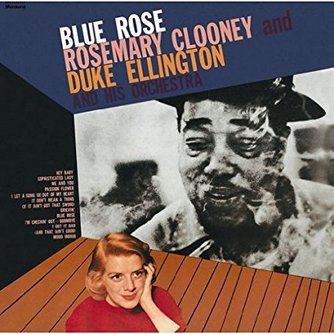
  • Rosemary Clooney, who collaborated with Duke and the orchestra on the 1956 Columbia album Blue Rose
Yes, that Rosemary Clooney, the one who starred with Bing Crosby, Danny Kaye, and Vera-Ellen in the movie musical White Christmas (1954) and recorded 1950s mega-sellers “Come On-a My House,” “Botcha Me,” “Hey There,” and “Mambo Italiano.”

Clooney was the first singer not drawn from the ranks of the Ellington orchestra to cut a full album with the Duke. Only two other singers had that honor: Ella Fitzgerald and Frank Sinatra.

Moreover, the idea for the project came not from Ellington, but from Rosemary. She wanted to break free of her pop chains, and Duke needed a boost in association with a high-flying AM radio and TV variety show pop star. At the time (early 1956) the maestro wandered in a frozen wilderness of public apathy and needed a breakout. Blue Rose, he must have thought, could be the icebreaker.
 
As it would turn out, Blue Rose would be the first album ever to be overdubbed. Ellington recorded the orchestra tracks in New York, and Rosemary added her vocals in Los Angeles.

This technical first was necessitated by the fact the singer was severely pregnant and unable to fly to New York—which also meant that the album’s designated arranger, Billy Strayhorn, had to fly back and forth between New York and California to work with Rosemary on song selection, setting of keys and tempo, and other musical matters.

The material the two chose consisted of six Ellington standards—“Sophisticated Lady,” “I Let a Song Go out of My Heart,” “It Don’t Mean a Thing,” “I Got It Bad,” “Mood Indigo,“ and “Just Sittin’ and A-Rockin’"—and three lesser known Ellington-Srayhorn collaborations—“Grievin’” and “I’m Checkin’ Out-Goombye” (both from 1939) and “If You Were in My Place” (1938)—as well as three new Ellington tunes, one of which, “Blue Rose,” had no lyrics, but came with instructions: just scat along with it.

Prominent critics Will Friedwald and Gary Giddins had nothing but high praise for the album, the latter declaring “Sophisticated Lady” to be one of the finest recorded versions ever.

To my ears, however, the results are disappointing. Ms. Clooney, known for her sultry voice, is not sultry enough, sounding a mite tense and more like pop icon Dinah Shore than any jazz singer one could name.

Rosemary chose not to stamp her mark on the famed doo-wah doo-wah riff on “It Don’t Mean a Thing,” avoiding it altogether, leaving it to the instrumentalists. Her “ba-bee  be-ba  be-ba  ba-ba” scatting on “Blue Rose” is amateurish, but Friedwald heard it differently, calling it “superlative.”

Nonetheless, one track, “Mood Indigo,” stands out, and could very well be one of the finest on record. Strayhorn rearranged the famous clarinet-trumpet-trombone-unison opening melody for Clooney’s wordless voice plus two trombones, which almost trumps the original.


Rosemary then sings the familiar lyrics in her most relaxed voice on the album. Outstanding solos follow by trumpeter Willie Cook and the two trombones (Britt Woodman and John Sanders) in unison again.

As Ken Crossland and Malcolm MacFarlane opine in their biography Late Life Jazz: The Life and Career of Rosemary Clooney:


[While] mid-1950s sales of Blue Rose were unspectacular . . . its importance in the careers of both its protagonists cannot be overstated. For Ellington, it took him back to Columbia and opened the door for Ellington at Newport ’56, which became the best selling album of his career and launched a resurgence that sustained him until his death in 1974. [Hence, the delayed thank-you from Duke to Rosemary in the form of a White House invitation.]

For Rosemary, it convinced the girl singer from Maysville [Ohio] that she was more than just a chirruping hit-maker. The experience of working with Ellington, she said, “validated me as an American singer. My work would not fade with my generation. I had now moved into a very exclusive group. [As her many late-life Concord albums would attest.]


Perhaps I have been a little harsh in my assessment of the album in question. Take a listen to the recently released Blue Rose CD on the Columbia Legacy label, and you decide.

One thing everyone should be able to agree on is that somebody passed up a golden opportunity to have Rosemary—when her late-life jazz voice had fully developed—to re-record over the original Ellington tracks, assuming the tapes could have been found in the vaults, of course.

Now that would have been something.
LISTEN TO BLOGCAST
2 Comments

Looking Back 50 Years: 1967 Jazz Overview Part 2

12/30/2017

1 Comment

 
NEWPORT JAZZ FESTIVAL
Mother Nature, in the form of fog, shivery temperatures, and intermittent tropical rain bursts, rendered the 1967 edition unlikely to make anyone’s NJF top 10 list. Still, the show went on with the usual cornucopia of musical acts and thematic groupings, as summarized below from reports by attending critics Whitney Balliett [1], Burt Goldblatt [2], and Dan Morgenstern [3].

June 30
The first day began with a “History of Jazz” lineup, although jazz critic Balliett likened it to a parade of pianists: Willie “the Lion” Smith, Earl Hines, Count Basie, Thelonius Monk, and John Lewis.

The first “History” group, led by percussionist Michael Olatunji, represented Mother Africa, which quickly gave way to Chicago with Earl Hines playing arrhythmic whirlpools and upper register single note jubilations (Balliett), leading to the New York Stride of Willie “the Lion” Smith and his booming irregular chord patterns, and rifle-shot single notes.

Count Basie (and associates) resurrected the sound of Kansas City, the pianist audible only in short solos behind the horn players. The “History” lesson continued with the 1940s bebop kings of New York: trumpeter Dizzy Gillespie, sax player James Moody, vibist Milt Jackson, pianist Thelonious Monk, bassist Perch Heath, and drummer Max Roach.

Balliett judged their performance disappointing save for Monk; he also praised John Lewis’s graceful and thoughtful approach to the piano. To complete the stroll down “History” lane, the first day’s concert concluded with saxophonist Albert Ayler’s quartet, the only “New Thing” group to appear at the 1967 festival after a somewhat controversial avant-garde breakout the previous year by saxophonist Archie Shepp.

July 1
The afternoon concert was labeled “The Five Faces of Jazz,” or the five ethnic influences on jazz, or better said, contributions from five jazz musicians from other countries—namely, guitarist Gabor Szabo of Hungary, Albert Manglesdorf of Germany, Michael Olatunji of Nigeria, Luis Enrique of Brazil, and Nobuo Hara, leader of the Japanese Orchestra Sharps and Flats.

Weatherman Balliett reported that the fog had been doing “the mazurka up and down Narragansett Bay all afternoon and [by nightfall] it circled once about the town and fell asleep,” along with much of the night’s concert that began with Herbie Mann on flute, Roy Ayers on vibes, and Charles Ganimian on electric oud.

This outfit presented a different perspective on what is and what isn’t jazz. Pianist Earl Hines slipped in with his usual outstanding set of classics, joined by Budd Johnson on soprano saxophone, but Newport Festival chronicler Goldblatt as well as critic Morgensten found it hard to fathom why the pianist was inserted in a lineup of relatively modern stars.

The John Handy Quintet (vibes, guitar, bass, drums and the leader’s alto sax) plodded through two endless numbers. Nina Simone, who sang at the previous year’s concert, got hung up in a couple of interminable laments about loose men and fast women.

Steady NJF presence Dizzy Gillespie appeared with his quintet and did four by-rote numbers, but the oddest disappointment in Balliett’s view was the Gary Burton Quintet with Larry Coryell on electric guitar that reached for a distillate of jazz and rock and roll but failed to grasp either one.
At midnight Buddy Rich and his band turned the pumpkin into a golden coach, the brightest moment of the evening, all agreed. Goldblatt waxed poetic over the drummer’s crowd-pleasing, gymnastic drum exhibition: Rich was astonishing in his virtuosity. His solo had a clarity and vividness that projected in sharp relief his inexhaustible energy as he built up from small explosions to a whirlpool of frenzy and passion.

Not to be surpassed, Morgenstern rhapsodized: his solo was an eruption, a phenomenon, a staggering display of superhuman endurance, co-ordination and control. It was an event in defiance of nature, and it is safe to say that no other drummer (or human being) could ever match it. Whew!

July 2
The afternoon concert began with the Japanese Sharps and Flats Big Band that Balliett characterized as a formidable cross between the late Jimmy Lunceford and early Stan Kenton bands, and its soloists suggested trombonist J. J. Johnson, trumpeters Art Farmer, and Clifford Brown, plus drummers Gene Krupa and Louis Bellson.

The main event was a vibraphone workshop—Bobby Hutcherson, Gary Burton, Red Norvo, and Milt Jackson, along with Lionel Hampton (believe it or not) making his Newport Jazz Festival debut.

According to Balliett, Burton sent up a ghostly unaccompanied ballad that was all willows and Debussy; Norvo produced a creditable (Cole Porter’s ) “I Love You,” and ended with his heavy mallet shtick—“slapsticks”—clumping around the keyboard like a slow-motion tap dancer.

Hampton unloaded his customary two-by-fours on a feverish “How High the Moon.” The audience kept interrupting him with bursts of applause. Hutcherson jammed a hundred notes into each measure on “Softly as in a Morning Sunrise,” and Jackson maintained his flowing lyric cool on “These Foolish Things.”

All five vibists got together for the closing “Hamp’s Boogie-Woogie,” accompanied by heavy rain. With a flood of perspiration running down their faces, Hamp and his colleagues took a bow to a cheering, smiling audience.

Goldblatt, more smitten than Balliett, called the workshop a Festival peak. Morgenstern said it was Newport at its best, the kind of happening that jazz festivals exist for.

There was an interpolated guest pianist in the midst of the workshop, much like Hines on the prior day’s evening concert, and the critics were none too happy about it. This time it was Billy Taylor, who captured the small, two thousand-member audience with his tremendous drive over an hour-long performance.

Unofficial weatherman Balliett reported that the rain for the evening was still reeling in low and cold at eight when the show began. He concluded all could have stayed home, summarily dismissing the night’s acts—Bill Evans Trio, Max Roach Quartet, Woody Herman’s Big Band, and the Miles Davis Quintet.

Goldblatt stayed the course and found much to like. Even with rain and sound system problems, he declared Max Roach’s unaccompanied drum solo, “It’s in Five,” the high spot of the evening and probably the whole Festival. Apparently, he was struck by the drummer’s individualistic clarity for sounds, giving new dimension and sensitivity without ever pounding (a là Buddy Rich, but he didn’t say).

Morgenstern followed suit: a masterpiece of musical intelligence and instrumental skill—perhaps the greatest musical drumming this listener has witnessed.

In 1966, Newport Festival Organizer George Wein introduced avant “New Thing” music for the first time. In 1967 it was rock music by the Blues Project—some of the group would go on to form the first rock-oriented jazz group, Blood, Sweat, and Tears.

Morgenstern felt the Project was probably not the best rock choice for a jazz festival. No matter, Wein needn’t have bothered because many in the audience headed for the refreshment area or out of the gates entirely.

Pianist Bill Evans, with drummer Jo Jones behind him emphasized the contrapuntal. Miles Davis closed the evening with several good moments, as did his tenor Wayne Shorter.

July 3
The afternoon was given over to big bands. Trumpeter Don Ellis’s 19-piece group featured an eight-man rhythm section: three bassists, four drummers, a pianist, and a mass of electronic equipment.
Odd-signature pieces were the specialty of the day, though the kind of music most of the weather-beaten audience wanted to hear. Ellis took his final bows before a few hundred people.

Still, Morgenstern, for one, was impressed, considering it an exceptionally well-drilled ensemble, an exciting band. The concert ended with a really BIG BAND, a 54-piece youth band from Massachusetts that played Basie, Goodman, Shaw, plus other compositions surprisingly well. Best of all, Balliett noted, were the glorious passages in which the brass section, 18 strong, opened up.

The evening concert was largely an extension of the previous evening’s tribute to Lionel Hampton. The opening acts: vibraphonist Red Norvo in a quartet setting (really needed?!); the Dave Brubeck Quartet showing more candlepower than usual (Balliett), Brubeck sounding better than he had in years (Goldblatt); jazz’s only opera singer Sarah Vaughan (according to Gary Giddins); and guitarist Wes Montgomery playing, at request, one of his breakout hits from the year before.

Picture
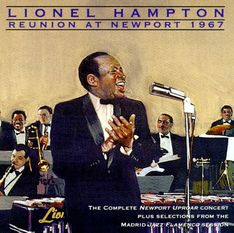
To close the evening and the Festival, the Lionel Hampton Band, made up of alumni, supported Lionel as he worked his various instruments (vibes, drums, piano). Of course, as everyone expected, the band played Hamp’s anthem “Flying Home,” featuring Illinois Jacquet’s legendary tenor solo.

Goldblatt caught the moment: The audience danced in the aisles and stomped on their seats while Hamp and organist Milt Buckner hammed in a hilarious dance routine onstage as Jacquet kept wailing chorus after chorus. It was Hamp’s first appearance at Newport and the crowd let him know that it was a triumph.

Balliett was likewise impressed: Illinois went through his celebrated calisthenics, and it was like hearing Francis Scott Key sing the “Star-Spangled Banner.”

Time to go home.

Read my next blog for part 3 of my look back at jazz 50 years ago.


NOTES

  1. Whitney Balliett, Collected Works: A Journal of Jazz, 1954–2001 (New York: St. Martin’s Griffin, 2002), 272–24.
  2. Burt Goldblatt, Newport jazz Festival: The Illustrated History (New York: Dial Press, 1977), 130–39.
  3. Dan Morgenstern with Ira Gitler, “Newport ‘67,” DownBeat, August 10, 1967, 20–39.


1 Comment

Looking Back 50 Years: Notable Jazz Albums of 1967

12/27/2017

3 Comments

 
Picture
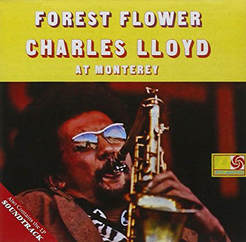
A half century ago, bandleader and reed/flute player Charles Lloyd was on the rise. He garnered DownBeat’s “new star” on tenor sax and flute in 1965, then busted out in 1966 on the strength of his Eastern-tinged albums Of Course, Of Course and Dreamweaver, and was finally crowned Jazzman of the Year by the magazine’s readers in 1967. Moreover, his Forest Flower album (recorded live at Monterey in 1966) took second place in the Record of the Year category.

Perhaps the most publicized Jazzman of the Year—he even toured the Soviet Union!—he polled well with DownBeat readers on tenor (third) and flute (second), as did his combo, with pianist Keith Jarrett and drummer Jack DeJohnette (second). Fans were far out in front of critics. The best the critics could do in their poll was award Lloyd’s youth-appealing combo first place in the Talent Deserving Wider Recognition category.

That same year also saw the release of three all-time classic albums by upper-echelon mainstays Miles Davis, Duke Ellington, and Sonny Rollins.


Picture
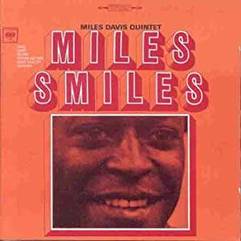
Miles’s second great quintet—alto saxophonist Wayne Shorter, pianist Herbie Hancock, bassist Ron Carter, and drummer Tony Williams—are at their absolute peak on Miles Smiles. Excellent original themes—“Circles,” “Orbits,” “Footprints”—with the players building a huge creative tension between Shorter’s oblique, churning solos and Mile’s private musings on trumpet within a rhythm section bursting to be free while still playing time.

The interaction between Hancock, Carter, and Williams is so tight, so self-contained that collectively it should be considered the third front line player alongside the horns.

It’s my favorite Davis album period. And by the way, the album won top honors in the 1967 DownBeat Reader’s poll. Read about my encounter with the jazz prince.


Picture
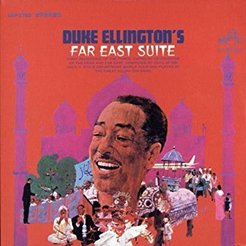
This is the one Ellington suite that would make everyone’s top five (my number one and second overall after Newport ’56). Duke’s prominent soloists—Hodges, Hamilton, Gonsalves, Carney, and the maestro himself—are front and center, delivering matchless, impossible-to-duplicate solos. Altoist Hodges’s turn on “Isfahan” is arguably the most beautiful in Ellington’s and Strayhorn’s entire output.

If this one brings a tear to your eye, then “Blue Pepper,” the bluesy flip side of the Hodges coin, will bring a smile to your face. Tenorman Gonsalves shines on “Mount Harissa” with a two-plus-minute serpentine, “please don’t stop” songful moan.

Multi-stylistic pianist Ellington eschews his penchant for dissonance and taps less used keyboard styles to sketch uncommonly beautiful melodies throughout. Check out my full review of the album.


Picture
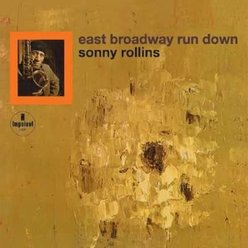
Sonny Rollins surprised many with his East Broadway Rundown offering that featured his tenor and extracted mouthpiece, along with John Coltrane’s rhythm section bassist Jimmy Harrison and drummer Elvin Jones with muscular trumpeter Freddie Hubbard (on one track).

At the time, many people thought Sonny was about to join the “New Thing” movement because of the 20-minute title track. The theme and the interplay between Sonny and Freddie, and the use of just a mouthpiece in sections reminded people of “New Wave” pioneers Ornette Coleman and Don Cherry.

But no, it was Rollins simply saying I can play free if I want to, and this is the way it should be done. On the other two tracks, it’s the old Sonny we all know, especially on “We Kiss in the Shadows.”

From Amazon reviewer Douglass Groothuis:

Few saxophonists can thrive and survive in the stripped down . . . format of drums, bass, and horn . . . The strength of [Rollins’s] tone in every register, the thematic improvizations, the sense of humor and intelligence (including the quotes from other songs, even classical pieces!)—all inspire respect and trigger delight in the soul.

Picture
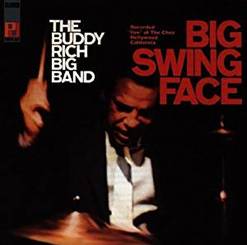
Quintessential swing era big band drummer Buddy Rich reformed a 1930s/40s style big band in 1966. And to no one’s surprise, it hit hard. There was nothing subtle about it—all was speed, bravado, and intensity.

It quickly became a festival crowd pleaser, and an international success. In the 1967 DownBeat Reader’s Poll, Buddy jumped from fourth to first place on drums, and his new band came close to winning.

The two albums Big Swing Face and Swingin’ New Band placed third and fourth, respectively, behind Miles Smiles and Forest Flower. As far as Jazzman of the Year, he came very close—only Charles Lloyd (first) and Duke Ellington (second) ranked higher. Not too shabby.


Picture
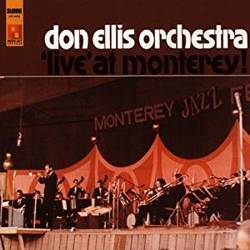
In 1966, trumpeter Don Ellis forged a new jazz orchestra with an unusual rhythm section—three drummers and four bases fronting conventional instrumentation, four trumpets, three trombones, five reeds, and piano/organ.

The resulting music was rhythmically exciting unmatched by any other jazz orchestra (save possibly for that of Sun Ra).

As critic Pete Welding saw it, the consummate execution of difficult (some said crazy or odd) time signatures, and its effortless way with forceful, emotion-charged rhythmic polyphony of an intimacy and subtlety not heard before, was extraordinary. [1] How about a meter in 9 divided by 2 2 2 3, or 19 divided 33 222 1 222!

The band was enthusiastically received at its inaugural festival performance at Monterey in 1966 and again in 1967 and at other performances in between. The jazz public dug the band, as evidenced by Ellis’s fourth-place finish in the Jazzman of the Year DownBeat Poll and the band’s fourth-place finish in the Big Band category. The band’s Live at Monterey album placed ninth in the Record of the Year contest.


Picture
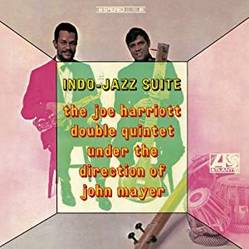
Yet another time signature mash-up (released in 1966 but reviewed in 1967) Indo-Jazz Suite: The Joe Harriott Double Quintet under the Direction of John Mayer—the first time in the history of music that Western musicians (all from the UK by the way) and Indian musicians played together from a written score. (Don Ellis fans might object, but his Hindustan group did not record and tour).

Kudos to composer-arranger John Mayer for making it happen. Improvising by both sets of musicians took place, especially by alto player Joe Harriott, who often moved outside the framework, playing his own brand of free jazz.

Not all fans and critics took to the fusion, but many did.

The Mayer-Harriett Double Quintet toured extensively, playing major concerts and clubs around Europe, and made two additional albums: Indo-Jazz Fusions and Indo-Jazz Fusions II. Maybe a little stilted at times, but always exciting and swinging. As Mayer later proclaimed, “World Music began here,” and who is to say otherwise. [2]


Picture
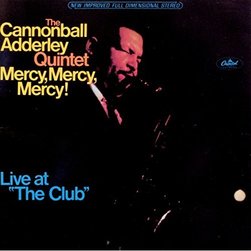
Mercy, Mercy, Mercy! Happy music (soul jazz, some called it) by Cannonball Adderley on alto, brother Nat on cornet, Joe Zawinal on electric and acoustic piano, Victor Haskin on bass, and Roy McCurdy on drums.

Six tunes, including Cannon’s classic “Sack of Woe” and Joe’s late night, slow in-the-pocket “Mercy” groove that became (believe it or not) a pop Top 10 single!

Producer Michael Cuscana: “One of the greatest uncompromising crossover successes in the history of jazz.”


NOTES

  1. Pete Welding, “Time for Revolution: An Interview with Don Ellis,” DownBeat, April 2, 1967, 25–28.
  2. Alan Robertson, Joe Harriett: Fire in his Soul (London: Northway Publications, 2003), 157–73.
3 Comments
<<Previous
Forward>>
    Picture
    Picture

    BUY NOW

    Picture

    BUY NOW


    EMAIL SIGNUP
    Receive news of upcoming blogs and events.


    Most Popular

    Music Blogs 2015–2023
    Business Advice from Miles Davis
    Miles and Me at the Modern Jazz Club

    Categories

    All
    Album Review
    Book Review
    Ellington
    Film Review
    Guest Post
    Jazz Albums
    Jazz History
    Jazz Musicians
    Music History
    Musicians
    Nixon
    Top 10 Jazz Albums

    Archives

    August 2023
    July 2023
    May 2023
    April 2023
    March 2023
    February 2023
    January 2023
    December 2022
    November 2022
    October 2022
    September 2022
    August 2022
    July 2022
    June 2022
    May 2022
    April 2022
    March 2022
    February 2022
    January 2022
    December 2021
    November 2021
    October 2021
    September 2021
    November 2020
    October 2020
    September 2020
    August 2020
    July 2020
    June 2020
    May 2020
    April 2020
    March 2020
    February 2020
    January 2020
    December 2019
    November 2019
    October 2019
    September 2019
    August 2019
    July 2019
    June 2019
    May 2019
    April 2019
    March 2019
    February 2019
    January 2019
    December 2018
    October 2018
    September 2018
    August 2018
    July 2018
    June 2018
    May 2018
    April 2018
    March 2018
    February 2018
    January 2018
    December 2017
    November 2017
    October 2017
    September 2017
    August 2017
    July 2017
    June 2017
    May 2017
    April 2017
    March 2017
    February 2017
    January 2017
    December 2016
    October 2016
    September 2016
    August 2016
    July 2016
    June 2016
    May 2016
    April 2016
    March 2016
    February 2016
    January 2016
    December 2015
    November 2015
    October 2015
    September 2015
    August 2015
    July 2015
    June 2015

    RSS Feed


FAINE BOOKS

Home  About  Books  Stories  Blog  Contact

Copyright © 2023 Edward Faine. All Rights Reserved.
Proudly powered by Weebly

BACK TO TOP

© 2021 FaineBooks

© DivTag Templates Ltd | All Rights Reserved