faine books
  • Home
  • About
  • Music Books
    • Serendipity Doo-Dah #1
    • Serendipity Doo-Dah #2
    • Ellington at the White House
    • The Best Gig in Town
  • Short Stories
    • Prisoner Chaser
    • Taxi Driver
  • Blog
  • Contact

1958: The Best Year in Jazz, Part 5

9/28/2020

1 Comment

 
Picture
As in any year, the jazz mainstream held steady as fads and trends ebbed and flowed (see part 3 and part 4 of this 1958 blog series). Swing-era stalwarts including Harry “Sweets” Edison and Roy Eldridge (trumpets), Louis Bellson (drums), Benny Carter (alto saxophone), and Coleman Hawkins and Ben Webster (tenor saxophones) released new recordings on the Verve label to a waiting jazz public.

So did the bebop masters of the 1940s: Dizzy Gillespie (trumpet), Stan Getz (tenor saxophone), J. J. Johnson (trombone), and Sonny Stitt (alto saxophone). 


Of the several outstanding mainstream albums that year, two on the Verve label stand out. The first album brought swing-era trumpeters Roy Eldridge and Sweets Edison together with bebop trumpeter Dizzy Gillespie (four and a half stars, DownBeat), while the second paired bebop trombonist J. J. Johnson with the cool tenor saxophone of Stan Getz (five stars, DownBeat).

Beneath the mainstream and surface trends, other obscure musicians toiled according to their own lights to reinvigorate the music. In time, the jazz public would recognize musicians such as Charles Mingus (bass) and Cecil Taylor (piano).


JAZZ COVERS BROADWAY
In 1958, jazz players discovered Broadway and Hollywood musicals in a big way. More jazz versions of shows appeared in record stores that year than any other year before or since. To be sure, jazz musicians had plumbed show tunes since the very beginning of the Great White Way, but they had never devoted an entire album to the tunes from a single show until the late 1950s.

It all began with the surprise smash recording in late 1957 of a jazz version of My Fair Lady by Andre Previn (piano), Shelly Manne (drums), and Leroy Vinnegar (bass) on Contemporary. A classically trained and noted writer of film scores, Previn was a surprisingly good jazz pianist—Bud Powell (sort of) with a romantic tinge.

Previn later conducted the Pittsburgh and other symphony orchestras, but in 1958 he was the star of the best-selling jazz record in history, surpassing the previous top seller, Brubeck’s
Jazz Goes to College recorded in 1954. Previn’s My Fair Lady was at the top of the monthly jazz charts all through 1958, falling no lower than fourth. 


Although it was eventually surpassed in sales by Miles Davis’s Columbia recordings, My Fair Lady astonished the recording industry. The tuneful score and the popularity of the stage play and movie helped, as did the tasteful drumming of Shelly Manne, but the album’s smash status was well deserved; a darn good jazz trio record (five stars, DownBeat).

Understandably, a rash of similar recordings followed. Previn/Manne released four other show tune albums--Li’l Abner and Gigi in 1958, followed by Pal Joey and West Side Story.

Then came the onslaught:
Gigi again (Shorty Rogers), Kismet (Mastersounds), The Music Man (Jimmy Giuffre), Porgy and Bess (Miles Davis), South Pacific twice (Chico Hamilton and Tony Scott), West Side Story twice (Manny Album and Oscar Peterson), and a host of other Broadway albums recorded by the Australian Jazz Quartet, Dick Marx, and others.

Every year has its fads, and this one belonged to 1958.


THE ATOMIC MR. BASIE
On top of everything else that happened in 1958, after a near decade-long decline, big bands surged back to popularity on the brass of the Count Basie and Duke Ellington orchestras.

Duke’s resurrection (he almost disbanded his orchestra of three decades in 1955) occurred around midnight on July 7, 1956, at the Newport Jazz Festival when Paul Gonsalves (tenor saxophone) took twenty-seven driving choruses on “Diminuendo and Crescendo in Blue,” causing a near rhythm riot among the 10,000 people in attendance.

Captured on vinyl by Columbia, the Newport recording received five stars in
DownBeat. 


The event was magical, almost mystical, a 1950s Woodstock that catapulted Duke and his band into the national limelight. Within weeks Duke was on the cover of Time, and whenever he was asked his age in later years, he would say only, “I was born in 1956 at the Newport Jazz Festival.”
Picture
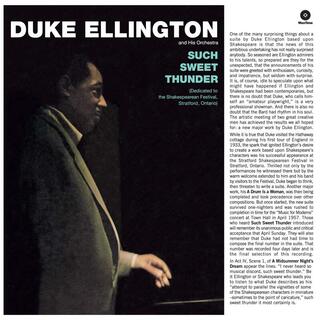
In 1957, his compositional skills rejuvenated, Duke premiered A Drum Is a Woman on television and recorded Such Sweet Thunder, a series of musical vignettes based on Shakespearean plays (five stars, DownBeat), and a musical portrait of Ella Fitzgerald.

In 1958, in the midst of his revival, Duke and his band toured Europe for the first time in eight years. The following year saw several more Ellington compositions and his first major film score for 
Anatomy of a Murder.


Duke was back! And so was the Count!

Basie’s comeback, unlike Duke’s, was not mercurial. After reforming his big band in 1953, his popularity steadily grew on the strength of hits such as “April in Paris,” with its “one more once” tag ending; and also “Shiny Stockings,” “Corner Pocket,” “Everyday and Alright, Okay, You Win,” the latter two with vocals by blues singer Joe Williams.
Picture
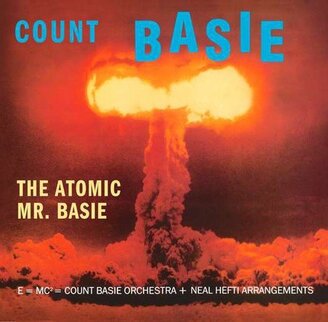
America was ready when The Atomic Mister Basie exploded on the scene in 1958.

This album, the first of 20 on the Roulette label, and many say the best (
DownBeat said four-and-a-half stars at the time), featured tunes written by a single arranger, Neal Hefti. Three of the tunes, “The Kid from Redbank,” “Whirly Bird,” and “Li’L Darlin’,” became staples in the Basie book for years after. 

​The Atomic band of 1958 was a powerhouse of talent to rival any band in jazz history, including Basie’s classic Kansas City band of the late 1930s.

His 1958 band had four trumpets: Joe Newman, Thad Jones, Snookie Young, and Wendall Culley; three trombones: Henry Coker, Benny Powell, and Al Grey; five saxes: Marshall Royal, Frank Wess, Frank Foster, Charlie Fowlkes, and either Billy Mitchell or Eddie “Lockjaw” Davis; and the rhythm section of Basie (piano), Freddie Green (guitar), Eddie Jones (bass), and Sonny Payne (drums). 

This band exhibited ensemble power, precision, discipline, and dynamic control rather than the freewheeling, barrier-breaking soloists of the classic late-1930s Basie band. The Count himself said, “I have never bragged on anything, but the band I had [in 1958] was one I could have bragged on.”

Basie followed the successful Atomic with an album entitled Basie plays Hefti. He also benefited by Sing a Song of Basie, the sleeper LP of the year by the vocal group Lambert, Hendricks and Ross. LHR took scat singing to new heights by vocalizing meaningful lyrics to Basie tunes, ensemble passages and solos alike.

This record garnered a five-star 
DownBeat award and further heightened interest in the band. It came as no surprise, then, when DownBeat readers voted Count Basie and Miles Davis Jazz Personalities of the Year and elected Basie into the magazine’s Hall of Fame.


While other big bands languished in 1958—Stan Kenton’s, for example—the success of the two premier big bands paved the way for a general big band revival in the early 1960s.
​
1 Comment

1958: The Best Year in Jazz, Part 4

8/18/2020

2 Comments

 
Picture

In part 3 of this 1958 blog series, we saw that 1958 gave rise to the “cool” West Coast–style jazz, a response to the blues-oriented East Coast style. That led to a reaction from many East Coast musicians, who favored a harder approach.

FUNKY HARD BOP GAINS TOEHOLD 
Hard bop was the very antithesis of the West Coast cool style. It emphasized solos, all but discarded arrangements, and adopted blues and gospel devices.

The small independent labels Blue Note and Prestige chronicled hard bop much the same way Contemporary and Pacific Jazz did the West Coast style. Blue Note had such contract artists as Art Blakey (drums), Kenny Burrel (guitar), Sonny Clark (piano), Lee Morgan (trumpet), Hank Mobley (tenor saxophone), Horace Silver (piano), and Jimmy Smith (organ).

Prestige had Donald Byrd (trumpet), John Coltrane (tenor saxophone), Art Farmer (trumpet), Curtis Fuller (trombone), Red Garland (piano), Jacky Mclean (alto saxophone), Art Taylor (drums), and Mal Waldron (piano).

Contracts were as loose as the music and allowed musicians to record on either label, which they often did.

Taken together, the Blue Note and Prestige recordings shared a common sound: a loose, rough-hewn, raw-edged, dark sound that celebrated individual over collective expression. While most of the musicians knew each other and often played together, they were not, for the most part, members of working bands.

Picture
​Hence, many albums documented blowing sessions, where soloists improvised at length on the harmonic pattern of the theme. Typically, the musicians recorded only two or three tunes per 20-minute side; even one per side was not uncommon.

​For all the hoopla in the trade press about hard bop rescuing the heart and soul of jazz, most of these albums received so-so three-star ratings in 
DownBeat.

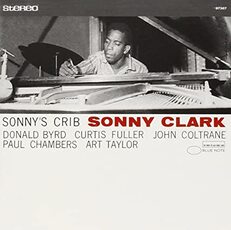
​Four- and five-star ratings were rare. Sonny Clarke’s albums on Blue Note--
Sonny’s Crib, for example—always contained vital music but never received high marks, at least not from DownBeat reviewers.

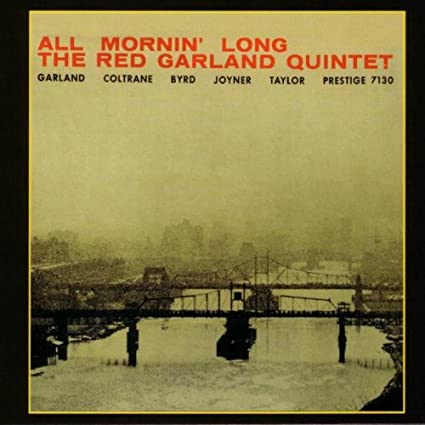
​Five albums in particular characterized the best of the hard bop movement in 1958. The first, 
All Morning Long on Prestige—led by Miles Davis pianist Red Garland, with John Coltrane (tenor saxophone), Donald Byrd (trumpet), and Prestige house drummer Arthur Taylor—devoted one side to the title track and featured good solos all around (four stars, DownBeat).

Picture
Picture
Picture

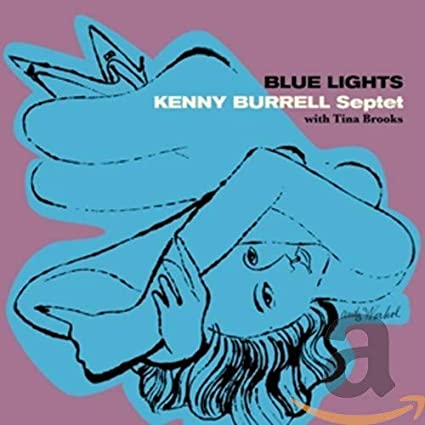
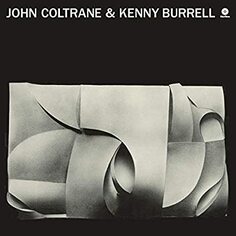
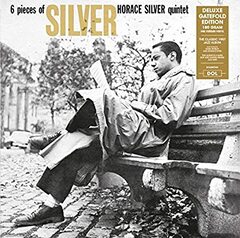
Guitarist Kenny Burrell recorded two minor gems, Blue Lights, with a stable of hard-boppers on Blue Note (five stars, DownBeat), and another with John Coltrane on Prestige (five stars, DownBeat), and Horace Silver added Six Pieces of Silver to his gospel-tinged hard bop library on Blue Note (five stars, DownBeat). 

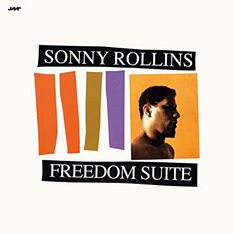
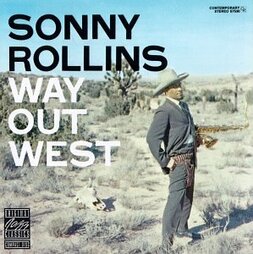
​Lastly, Sonny Rollins recorded Freedom Suite on Riverside (four stars, DownBeat) with Oscar Pettiford (bass) and Max Roach (drums), which surpassed his Way Out West album on Contemporary.

Picture
Picture
While the hard boppers found their jazz audience in 1958, they had not yet broken through to the general public, except perhaps for Horace Silver, who was the only hard bopper to appear at the 1958 Newport Jazz Festival. No hard bop album finished in the top 20 jazz album sales for that year. ​
​
Picture
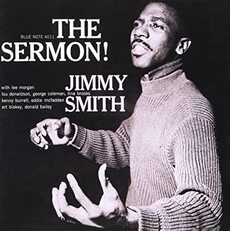
​The first bop organist, Jimmy Smith, recorded and released albums faster than any musician alive, stocking record bins with his sixth through ninth albums for Blue Note that year. In a few short years, he would be known nationally for his hit recording of the title song of the movie Walk on the Wild Side.

​In 1958, the terms “funky” and “soul” appeared regularly in DownBeat articles to describe the R&B, gospel-tinged hard bop of musicians like Art Blakey and Horace Silver.

​This music sowed the seeds of the funky, hard bop soul music of the early 1960s, which propelled hard bop musicians to prominence and made household names of Cannonball Adderly, Art Blakey, Ramsey Lewis, Lee Morgan, Les McCann, Bobby Timmons, and Jimmy Smith, among others.
​

2 Comments

1958: The Best Year in Jazz, Part 3

7/21/2020

1 Comment

 
Picture

​By any measure, 1958 was no ordinary year in jazz. Controversy raged in the trade press over West Coast style, or “cool” jazz, at a time when it was never more popular with the public. As they had since 1955, critics lambasted the West Coast style as intellectual music fraught with overarranging, lame solos, and lifeless rhythm.

WEST COAST JAZZ FIGHTS BACK
Paradoxically, a new and aggressive brand of West Coast jazz, later labeled “California Hard,” emerged just prior to 1958 and resulted in some of the finest recordings by West Coast musicians ever. A 1958 DownBeat article—“West Coast Fights Back”— aptly summarized the situation: “If West Coast [jazz], with its arranging tricks, classical devices, generally constrained emotional content, is being slowly eclipsed by the tougher fibered, blues-oriented East Coast style—and there is a growing realization this is happening—the West Coast is fighting back.”

And indeed it was!

By the end of the year, record bins held three albums by the Curtis Counce Group—the strongest West Coast combo of the 1950s. This quintet featured the swinging rhythm section of Curtis Counce (bass), Frank Butler (drums), and the underrated Carl Perkins (piano), and a two-horn frontline of Harold Land (tenor saxophone) and Jack Sheldon (trumpet). 

The group exhibited as much fire and cohesiveness as any quintet of the 1950s, including the classic Miles Davis quintet, the Max Roach–Clifford Brown quintet, and Art Blakey’s Jazz Messengers. Recorded on the West Coast by the independent Contemporary label, all three albums were well received in DownBeat, two receiving four stars and one five.
Picture
Picture
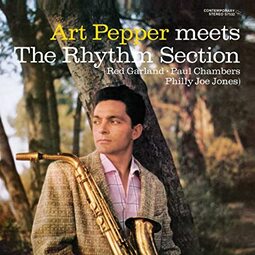
The two Contemporary albums Way Out West, with Sonny Rollins (tenor saxophone), Ray Brown (bass), and Shelly Manne (drums), and Art Pepper Meets the Rhythm Section (the Miles Davis rhythm section) proved that West Coast jazzmen could play with East Coast jazzmen (as if there had been any doubt). The former album (five stars, DownBeat) reaffirmed Sonny Rollins as the premier tenor saxophone improviser of the day, while the latter (also five stars, DownBeat) confirmed Art Pepper as the premier improvising stylist on the West Coast. ​​

​Art Pepper Meets and subsequent albums also confirmed Pepper as one of the few unique voices on alto saxophone since Charlie Parker.
​
Picture
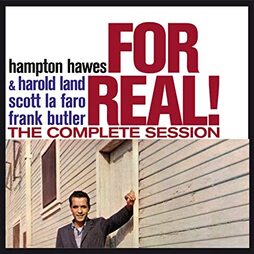
Contemporary also issued several trio albums by pianist Hampton Hawes, including the famous All Night Sessions, Vols. I–III, and a quartet session, For Real!, with Harold Land. These four- and five-star albums catapulted Hawes to national attention within the jazz community.

​His churchy, neo-bop style influenced many East Coast pianists and extended the jazz piano lexicon beyond premier bop pianist Bud Powell.

Two more Contemporary albums--
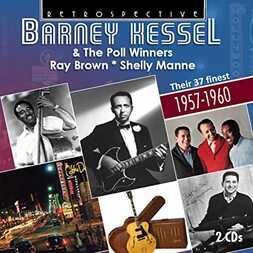
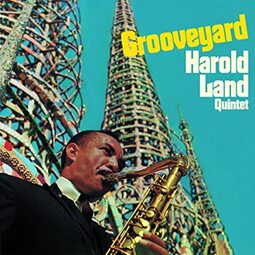
The Poll Winners, with Barney Kessel (guitar), Ray Brown (bass), and Shelly Manne (drums), and Grooveyard, with the Harold Land Quintet—also received five-star awards in DownBeat. Truly, 1958 was Contemporary’s year.

Picture
Picture
Other albums on the Pacific Jazz and World Pacific labels, featuring artists like Pepper Adams, Manny Album, Chet Baker, and Gerry Mulligan, also received excellent reviews in DownBeat. West Coast jazz—cool or California Hard—was a fad that ceased to exist only in the minds of a few influential critics.

In the DownBeat Critics Poll that year, West Coast or cool school musicians still ranked highly—Jimmy Giuffre (#2 combo), Gerry Mulligan (#1 baritone saxophone), Stan Getz (#1 tenor saxophone), Lee Konitz (#1 alto saxophone), Shelly Manne (#1 drums), Barney Kessel (#1 guitar), and Tony Scott (#1 clarinet). The year-end Readers Poll showed little difference, except that cool-schooler Paul Desmond inched out Konitz on alto saxophone.

And it bears mentioning that the first Monterey Jazz Festival was held in 1958—the West Coast answer to the Newport Jazz Festival, which began in 1953.
​
1 Comment

1958: The Best Year in Jazz, Part 2

6/23/2020

1 Comment

 
Picture

In the first part of this blog series, we looked at two of the four jazz innovators who came to the fore in 1958—Miles Davis, John Coltrane. Here, we move on to the other two: Thelonius Monk and Ornette Coleman.

THELONIUS MONK
Thelonius Monk, a jazz icon dedicated to his art, finally received his long-overdue recognition in 1958. Monk, who today is regarded as a major composer almost on a par with Duke Ellington, languished in obscurity until 1957. This lack of recognition stemmed in part from the loss of his cabaret card in 1951 due to a questionable drug charge, which prevented him from working in New York City (the jazz capital of the world and his hometown). The neglect was also the result of his highly personal approach to the piano, misunderstood by many musicians and critics alike.

But his recordings didn’t go totally unrecognized. A handful of New York critics consistently championed his work. In 1957, after regaining his cabaret card, Monk played at the Five Spot Café in lower Manhattan six nights a week to capacity crowds. Musicians and critics began to spread the word.

Here was a pianist whose approach eschewed the modern and embraced the traditional, an unabashed melodist—albeit, a quirky one—who embellished and extended the melody like jazzmen of the past, yet sounded “far out,” more modern than modern. Here was a pianist not easily copied or understood at first hearing. As the jazz world soon learned, Monk’s music consisted of more than idiosyncratic, dissonant melodies.

The Five Spot gig was but a prelude to Monk’s discovery as a major jazzman. Some say “rediscovery” because of his early 1940s contributions to bebop, but the truth is that very few Americans had ever heard of him prior to 1958. Monk was profiled in DownBeat that year in an article headlined “Finally Discovered” and was awarded first place on piano—for the first time—in both the Critics and Readers Polls.

With Monk’s discovery, Riverside, his recording company since 1955, heavily promoted his early albums and recorded new ones, often with jazz greats, no doubt to confirm his newfound position within the jazz tradition. In 1959, Monk showcased his music in a big-band setting at a memorable Town Hall concert.
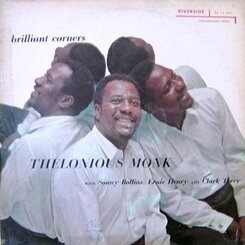
brilliant corners album
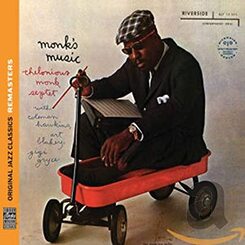
monk's music album
Three years and many club dates later, he signed with Columbia, where he recorded eight well-publicized albums over the next seven years. Monk’s transformation from underground genius to jazz icon was celebrated in 1964 when he appeared on the cover of Time, joining Louis Armstrong, Dave Brubeck, Duke Ellington, and Frank Sinatra as the only jazzmen to be so honored.

His 40-some composition legacy, which he essentially completed before his public discovery in 1958, equals that of any 20th-century composer.


ORNETTE!
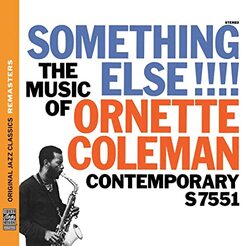
Ornette Coleman also came to prominence in 1958 with an album on the small Contemporary label entitled Something Else! The LP sounded like some quirky brand of bebop and received neither general critical nor popular acclaim, although the DownBeat reviewer gave it four and a half stars.
​
something else album
​Besides being the first recorded document of the “free jazz” movement that flourished in the 1960s, its historical significance may be in the album notes, where Ornette stated, “I think one day music will be a lot freer. Then the pattern of the tune, for instance, will be forgotten and the tune itself will be the pattern. . . . I believe music is really a free thing.”

​Ornette based his improvisations on the atmosphere or mood of a piece, deemphasizing the melody, the underlying harmonic structure, and the key. His approach to improvisation, not at first really understood by anyone, was variously labeled as modal, thematic, or intuitive. Ornette would later describe it as “harmolodic,” which, he said, “has as to do with the melody, the harmony and the rhythm all equal.”


In 1959, Ornette recorded two more albums, Tomorrow Is the Question! and The Shape of Jazz to Come—considered pejorative titles by most jazzmen of the day—and took New York City by storm, gaining instant notoriety and turning a two-week gig at the Five Spot Café into a three-month stay.

While critics were labeling Coltrane’s music “anti-jazz,” they called Ornette’s “anti-music,” “chaos,” and worse. One critic said, “His is not musical freedom; disdain for principles and boundaries is synonymous not with freedom but with anarchy.” Ornette’s use of an occasional squawky white plastic alto saxophone didn’t help matters either.

While his detractors were legion, his supporters (who swore from the start he was a genius) were among the bigger lights in jazz music and criticism—Leonard Bernstein, Nat Hentoff, John Lewis, Gunther Schuller, and Martin Williams, to name a few.

One of the most controversial of jazz icons to this day, Ornette has never received the public acclaim or the financial reward the others have, even belatedly. In time, he was grudgingly recognized as a major innovator in jazz for launching free jazz and influencing many musicians, including Coltrane.

LASTING CONTRIBUTIONS
The fact that four major innovators of jazz—Miles Davis, John Coltrane, Thelonius Monk, and Ornette Coleman--came to the fore in 1958 is quite astonishing. Each, it could be said, was a tonal innovator. No one before or since has sounded like Miles, Coltrane, Monk, or Ornette on their respective instruments. It could also be said that each had far-reaching influence—another mark of innovation. Each, in his own way, was a composer, with Monk the most unique; and they all pointed the way to more, not less, freedom in jazz.

More significant, however, are their lasting contributions to musical improvisation, the key ingredient in jazz. Miles blazed the way for improvisations on scales and modes; Monk, on melody; Coltrane, on harmonic structure and eventually modes; and Ornette, on atmosphere or mood of a piece.

While not one of them was the first or only musician to explore these concepts in jazz, they all developed them to the point of universal admiration and recognition in the context of later 20th-century music.
​
1 Comment

1958: The Best Year in Jazz, Part 1

5/26/2020

1 Comment

 
Picture
​
Has there ever been a year in jazz like 1958? Jazz was literally in the air—on radio, TV, and the silver screen.

Four jazz icons came to prominence that year. Record bins overflowed with numerous recordings that would become enduring jazz classics. Public awareness of jazz was near an all-time high due to the notoriety of the beatnik jazz subculture, the popularity of West Coast jazz, and the musicality of household-name jazz musicians like Basie, Brubeck, Ellington, Fitzgerald, Getz, Shearing, and Sinatra.

And jazz was big business for the first time since the 1930s.

Four icons—Miles Davis, John Coltrane, Thelonius Monk, and Ornette Coleman—came to the fore in 1958, each to a different degree of public recognition and critical acclaim. They not only changed the direction of jazz forever but now rank among the handful of true jazz innovators who preceded them: Louis Armstrong, Duke Ellington, Dizzy Gillespie, Coleman Hawkins, Earl Hines, Jelly Roll Morton, Charlie Parker, Bud Powell, and Lester Young, to name the most prominent.

MILES AHEAD . . . WAY AHEAD
First and foremost, 1958 was the year of trumpeter Miles Davis. Record bins were filled by his prodigious output since his return to jazz in 1954, including his second full-scale masterpiece Walkin’. That album spawned the funky, hard bop jazz of the late 1950s and 1960s, much as his first masterpiece, Birth of the Cool, launched the “cool” West Coast jazz of the 1950s.

More importantly, record bins held the recorded work of his first great quintet: Paul Chambers (bass), John Coltrane (tenor saxophone), Red Garland (piano), Philly Joe Jones (drums), and, of course, Miles himself (trumpet). In terms of impact, these recordings—five albums in all—can be compared to Louis Armstrong’s classic small-group Hot Five and Hot Seven performances of the late 1920s. Miles’s quintet defined anew the potential for small-group jazz and expanded the emotional range from unbridled joy (Judy Garland) to fierce drive (Coltrane) to alternating complex sorrow and crisp rapture (Miles), often in the course of a single tune.

Picture
Picture
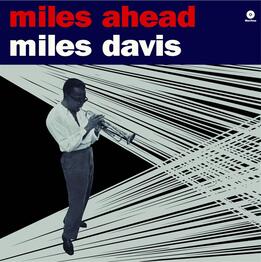
​Miles’s switch in 1957 from the small Prestige label to the international conglomerate Columbia reaped handsome dividends for him in 1958—not only in developing name recognition but in providing the means to produce Miles Ahead, an orchestral suite of 10 seamlessly linked concertos with Miles as the single improvising soloist. With its sustained mood of urbane melancholy, Miles Ahead is one of the first jazz instrumental concept albums. (Honors for the first jazz vocal concept album go to Frank Sinatra.)

A collaboration between Miles and arranger Gil Evans, Miles Ahead featured the gentle lyricism of Miles on flugelhorn supported by a symphonic brass and reed choir. Miles’s use of the flugelhorn not only introduced a new sound to jazz but also rescued that instrument from the relative obscurity of marching bands. The album received the equivalent of a Grammy Award in France and an excellent five-star rating in DownBeat, the premier US jazz magazine of the day.
​
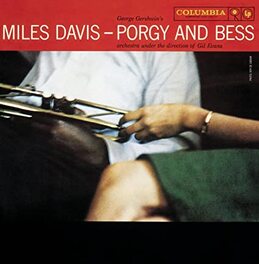
In late 1958, Columbia released the second Davis/Evans collaboration: a magnificent orchestral version of George Gershwin’s 
Porgy and Bess. Like Miles Ahead, Porgy and Bess featured a sustained dialog between Miles and the orchestra. Unlike the previous album, it exhibited a wider emotional range with Miles more dominant, partly because of his use of trumpet. It, too, received a five-star award in DownBeat.

Miles and Gil joined forces again on Sketches of Spain and Quiet Nights, but only Spain would maintain the excellence of Miles Ahead and Porgy and Bess. The Davis/Evans collaborations stand out as major contributions to 20th-century music, almost on a par with the classic small-group performances of Miles's first great quintet. His place in the jazz pantheon would have been assured on the basis of the quintet recordings and the orchestral collaborations with Gil Evans. But Miles had just begun.
​
Picture
Picture
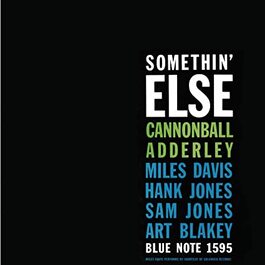
In early 1958, he appeared as a sideman on the album Somethin' Else, along with nominal leader Julian “Cannonball” Adderley (alto saxophone), Art Blakey (drums), Hank Jones (piano) and Sam Jones (bass). Miles soloed aggressively throughout and dominated the album, producing yet another small-group masterpiece on par with the classic quintet recordings. Somethin' Else received five stars in DownBeat at the time and is regarded today as one of the all-time great jazz albums.
​
In mid-1958, Miles formed his first great sextet by adding Adderley to his quintet lineup. The group recorded
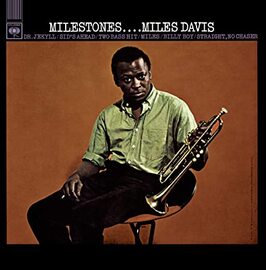
 Milestones and again opened up new musical territory, basing certain tunes and improvisations on modes and scales instead of on the song-form harmonic sequences that had been the favored approach for most jazzmen in the 1940s and 1950s. This time, DownBeat awarded Milestones only four stars.

​Soon after 
Milestones, Miles replaced Red Garland with the introspective Bill Evans on piano and Philly Joe Jones with Billy Cobb on drums and produced the second great sextet. This group played at clubs and concerts throughout 1958 and recorded Kind of Blue in early 1959—one of the most celebrated albums in jazz history. The album expanded on the modal approach first revealed on Milestones and emphasized melodic over harmonic variation. Blue received almost instant universal acclaim and once again brought Miles a five-star award in DownBeat.

Without doubt, 1958 was Miles’s year, creatively, critically, and publicly. He emerged from the jazz underground onto the national scene as the year began with a feature story in Time magazine, a clear sign that Miles had arrived.

In midyear, Life International listed Miles as one of the 14 Black people who had achieved a stature of greatness. At year’s end, he had won first place in the DownBeat Critics and Readers Polls on trumpet and shared Jazzman of the Year honors with Count Basie. With general public recognition came financial recognition as well. He commanded concert and club fees comparable to only a handful of jazzmen—Dave Brubeck, Erroll Garner, and Chico Hamilton—while his albums sold at five to 10 times the norm for jazz.

​
COLTRANE BREAKS THE SOUND BARRIER
The year 1958 was also good for another jazz icon, John Coltrane. While critical acclaim for Coltrane was not universal—there was even hostility in some quarters—and public recognition years off, Coltrane emerged that year as a new force on the tenor saxophone.

Some saw Coltrane, a key member of the great quintet and sextets, as riding Miles’s coattails to undeserved prominence. But others saw something new in his tenor playing: an extension of Coleman Hawkins, perhaps, but somehow different. Coltrane thought in sixteenth notes, while most players—and critics—thought in eighth notes.
​

Picture
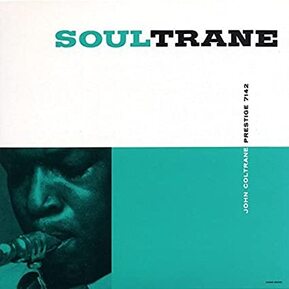
In a DownBeat article in late 1958, Ira Gitler dubbed Coltrane’s multi-note, high-energy solos “sheets of sound,” a label that stuck to describe his playing into the early 1960s. Other than a five-star rating in DownBeat for Soultrane—Coltrane’s third outing on Prestige as a leader—most reviewers criticized his approach to jazz.
They typically said his playing on Miles’s albums flawed otherwise perfect recordings. One critic said of Milestones, “Coltrane records material best left in the practice room.” DownBeat’s reviewer of the Newport Jazz Festival that year claimed Miles was hampered by the “angry young tenor” of Coltrane, another label that stuck. The DownBeat Critics Poll at midyear placed him fifth, behind fellow tenorists Stan Getz, Sonny Rollins, and Ben Webster.

The negative criticism continued into the 1960s, some reviewers arguing that his playing was “anti-jazz.” But after Coltrane picked up the soprano saxophone and recorded “My Favorite Things” in late 1960—rescuing that instrument from obscurity as Miles had rescued the flugelhorn—and recorded A Love Supreme in 1964, critical opinion turned mostly positive.

​Coltrane’s playing continued to evolve amid controversy until his untimely death in 1967. As is so often the case, only after his death were his contributions to jazz seen as truly revolutionary. While never enjoying the same broad public acceptance as Miles, Coltrane was viewed as an inspirational leader for his uncompromising dedication to his art.


1 Comment

Jazz and the Summer of Love

4/30/2020

2 Comments

 
Picture
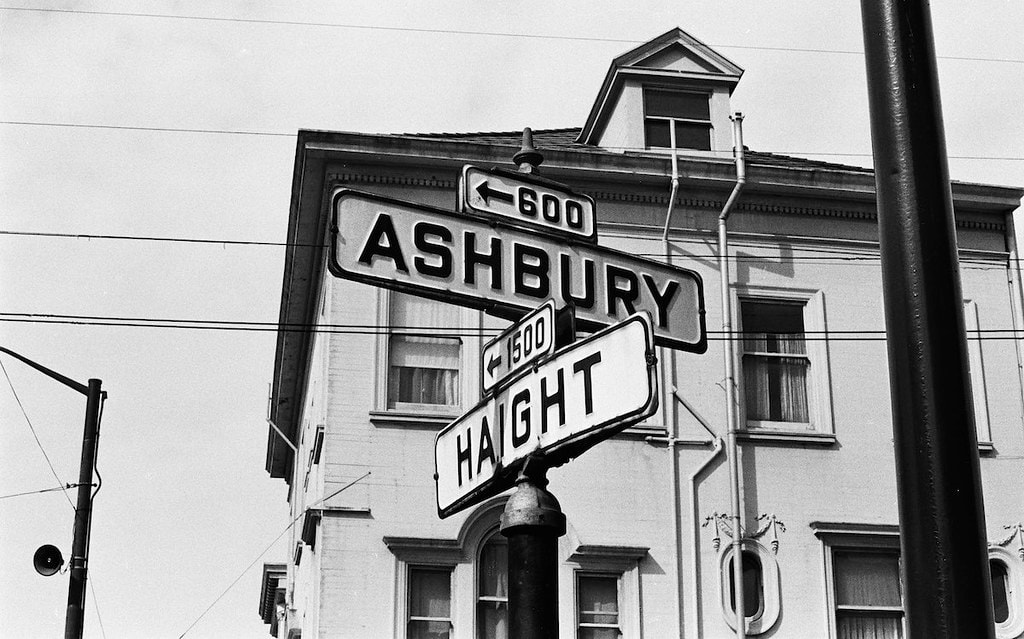
The junction of Haight and Ashbury Streets in San Francisco was the central location of the Summer of Love in 1967.

Believe it or not, John Coltrane and Miles Davis inspired the hippie Summer of Love in 1967. Here's how.

JOHN COLTRANE
The lead guitarist of the Byrds folk rock group, Jim McGuinn (later known as Roger), transposed the short, choppy clusters of Indian classicist Ravi Shankar’s sitar sound to his 12-string Rickenbacker guitar and melded them to a phrase quoted directly from the intro to jazz tenor titan Coltrane’s 1961 composition “India.”

The result: the 1966 hit single “Eight Miles High,” which signposted a future for psychedelic music—variously labeled raga rock, acid rock, space rock—that would dominate American pop charts from 1967 to 1970.[1]

McGuinn was a fan of North Indian folk music, particularly that of Ravi Shankar, but so was John Coltrane. The latter’s interest, however, began several years earlier as he explored folk music from other countries, along with listening closely to the recordings of sitar virtuoso Shankar.[2]

Coltrane’s “India” was recorded at New York’s Village Vanguard in November 1961 and released on the Impressions album (Impulse!) in July 1963. This track, which also featured Eric Dolphy, was Coltrane’s attempt to incorporate everything he had recently learned from his folk studies.

The source of the melody line McGuinn borrowed for “Eight Miles High” was a Vedic chant (recitations from the Indian Vedas, religious scriptures dating back as far as 3,000 years) that Coltrane had heard on the 1952 Folkways LP Religious Music of India.[3]

So—from a 3,000-year-old Vedic chant to Coltrane’s tenor solo to McGuinn’s 12-string offering to God’s ears. How cool is that? Rock on!

Interestingly, “Eight Miles High” never climbed to the top of the charts during its release year, perhaps because it was too complex, too long, too fraught with controversy, and too tepidly promoted. But it had major influence on Laurel Canyon musicians Stephen Stills, David Crosby, Neil Young, and others during the 1967 Summer of Love.

The song has aged splendidly. In 1991, it was inducted into the Grammy Hall of Fame. In 2004, Rolling Stone magazine ranked it number 151 on its list of the 500 Greatest Songs of All Time, and in March 2005, Q magazine ranked it number 50 on its list of the 100 Greatest Guitar Tracks Ever.

MILES DAVIS
Just as “Eight Miles High” was based on a venerable religious sound by way of a prominent jazz instrumentalist, so too was “White Rabbit.” This 1967 counterculture anthem was based on a centuries-old Spanish religious processional song by way of trumpeter Miles Davis and orchestra arranger Gil Evans from their album Sketches of Spain. In this instance, the interpreting rock composer was Jefferson Airplane lead singer Grace Slick.

A year before she joined Airplane, Slick wrote “White Rabbit” at home on an upright piano at the end of an LSD trip during which she listened to Sketches of Spain and its “Saeta” track for 24 hours straight.[4]

​“Saeta,” as described in the album’s liner notes, is:

One of the oldest religious types of music in Andalusa, [the“Saeta,” or “arrow of the song”] is usually sung without accompaniment during the Holy Week religious procession in Seville. It tells of the Passion of Christ and is usually addressed to the image of the crucified Christ that is carried in the march. . . . The singer is usually a woman, stands on a balcony overlooking the [stopped] procession . . . while the “Saeta” is being sung. A fanfare of trumpets gives the signal to move on.
 
Gil Evans has recreated the [music for] the street procession, and Miles has the role of the woman aiming the “arrow of the song.”[5]

Unaware of the above, Grace Slick set lyrics to “Saeta” around Lewis Carroll’s Alice in Wonderland, aligning Alice’s dream world with the drug subculture Grace knew all too well—a hookah-smoking caterpillar, pills that make you smaller or bigger, and a mind-altering mushroom. 

She took her cleverly titled “White Rabbit” to her Great Society bandmates, and they quickly developed a six-minute version for their stage shows, replete with the Spanish march and echoes of Ravel’s crescendo-building bolero as implied in Sketches of Spain.

Grace soon left Great Society for Jefferson Airplane, taking her “White Rabbit” (and commanding siren voice) along with her, just in time for her new band to record a 2.7-minute version of the song on their second album, Surrealistic Pillow. 

Released in January 1967, the album climbed the charts, reaching number three in August—not bad, considering the year’s dominating album was the Beatles’ Sgt. Pepper’s Lonely Hearts Club Band. The “White Rabbit” single was released in May. According to Rob Hughes of Classic Rock magazine, the song was meaningful to the time:
​
​If one song came to define the Haight-Ashbury counter-culture itself, it was Airplane’s “White Rabbit.” Released in the loved-up summer of ’67, its heavy allusions to the altered states in Lewis Carroll’s Alice’s Adventures in Wonderland, along with its exhortations to “feed your head,” seemed to invite a whole new generation to trip out on the pleasures of psychedelics. For those for whom love, peace, and LSD were inseparable, it became an anthem.[6]
​
Nonetheless, the song’s reception was somewhat lukewarm and it spent a limited time on the charts, peaking at number eight, perhaps because it was controversial and not a hot dance number (try boogieing to a bolero march). “White Rabbit” fell to the bottom of Rolling Stone magazine’s list of 500 Greatest Songs of All Time, landing at number 478, but like “Eight Miles High,” it too has enjoyed a profitable afterlife, largely due to its many uses on Hollywood film soundtracks[7] and its tie-in with one of the great literary works in the English language.

All of this makes for a fascinating juxtaposition, most would agree: Miles Davis as the “Saeta” singer in Sketches of Spain, and Grace Slick as the “White Rabbit” voice in Surrealistic Pillow.

CODA
For those interested in a transcription of Coltrane’s “India” improvisation from the Impressions album, please contact Coltrane expert Andrew White at Andrew’s Musical Enterprises Inc., 4830 S. Dakota Ave., NE, Washington, DC 20017. Ask for Coltrane transcription number 198.

NOTES

  1. Rob Chapman, Psychedelia and Other Colors (London: Faber & Faber, 2015), 153.
  2. Lewis Porter, John Coltrane: His Life and Music (Ann Arbor, MI: The University of Michigan Press, 1998), 209.
  3. Ibid; Chapman, Psychedelia and Other Colors, 154.
  4. Rob Hughes, “The Story Behind the Song: White Rabbit by Jefferson Airplane,” Classic Rock, March 5, 2019.
  5. Liner Notes, Nat Hentoff, Miles Davis—Sketches of Spain, orchestra arranged and conducted by Gil Evans, Columbia Records, CD, CK 40578, 1960. 
  6. Hughes, “Story Behind the Song.”
  7. Ibid.
​
2 Comments

Newport All-Stars: Lost and Found

1/30/2020

3 Comments

 
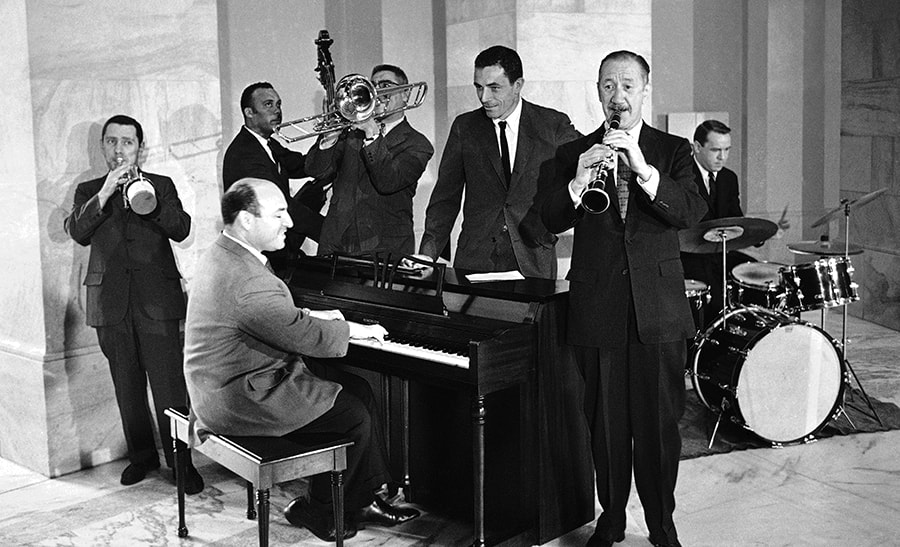
PictureNewport All-Stars play in the Old Senate Office Building in Washington, DC, on June 18, 1962. From left: Ruby Braff (trumpet), George Wein (piano), Billy Taylor (bass), Marshall Brown (trombone), Senator Claiborne Pell, Pee Wee Russell (clarinet), and Eddie Phyfe (drums). (AP Photo)

​In a previous blog, I discussed a jazz concert sponsored by the Kennedy White House that was held at the Sylvan Theater on the Washington Monument grounds on the night of August 28, 1962. A gathering of mostly government summer interns heard the classic Brubeck Quartet followed by singer Tony Bennett and his trio. Columbia Records, with prominent producer Teo Macero on hand, recorded the music and belatedly released Bennett/Brubeck: The White House Sessions, Live 1962, on Columbia CD in 2013. 

But surprise, surprise, there was another jazz group on the bill that night—the Newport All-Stars—led by jazz festival impresario and pianist George Wein. In fact, they opened the show, and Columbia recorded them as well but did not release the music. The sounds the interns heard that balmy summer night are now available to the public, thanks to the staff at the Library of Congress in Washington, DC (more on this later). 

A swing Dixie outfit, the Newport All-Stars had been in existence since 1956 under the tutelage of George Wein. Over the years, numerous talented musicians have cycled on and off the roster. But during the 1958–1963 period, the core slots remained rather stable: George Wein (piano), Pee Wee Russell (clarinet), Ruby Braff (cornet), and Marshall Brown (valve trombone), supported by a pickup bassist and drummer, as was the case for the Kennedy-sponsored gig. 

At the time, according to New Yorker critic Whitney Balliett, Wein’s group represented a type of jazz that was rapidly disappearing—relaxed, emotional, unpretentious, and of no school, firming the heart and brightening the eye.[1]

Pianist Wein was a swing stylist somewhere between Fats Waller and Teddy Wilson (Balliett again), though still comfortable in a bebop setting. His playing always amazed and exceeded expectations, especially for one burdened with the managerial complexities associated with staging festivals.

Clarinetist Pee Wee Russell’s playing was, well, a poet’s delight. From Balliett: “hopefully eccentric, squeaks, coppery tone, querulousness, growls, and overall hesitancy—most original stylist in jazz.”[2] And from another, writer/pianist Dick Wellstood, “crabbed, chocked, knotted tangle of squawks with which he could create such woodsy freedoms, such an enormous roomy private universe.” Nonetheless, all would agree that Pee Wee Russell could also coax pure and gentle notes from his instrument when he wanted to.[3] 

Cornetist Braff took a pre-Bebop approach to improvisation, perhaps using more embellishment and vibrato than modernists, similar to his idol Louis Armstrong. Overall, he was a relaxed melodist, unique like his frontline companion, and should have been much better known.

Trombonist Brown had earned his festival wings with Wein back in 1958, when he worked his tail off to form the International Youth Band, which performed at Newport. The venture ultimately failed, done in by too many negative critical reviews. A later attempt at establishing a youth band made up of American high school kids succeeded, thereby reinforcing his exemplary leadership and teaching skills.[4]

As a trombonist, Brown never ranked at the top of the jazz polls, his reputation based on being a solid ensemble player. Wein once commented, “Marshall played decent valve trombone, although he never really had a trombone lip.”[5] 

The rhythm section for the Kennedy gig consisted of Washington, DC, natives Billy Taylor Jr. on bass—yes, the son of famous pianist Billy Taylor—and Eddie Phyfe on drums. 

The evening’s mostly youthful audience may not have been familiar with the Newport All-Stars and their brand of “rapidly disappearing” jazz. Their appearance occurred largely because three months prior, Rhode Island Senator Claiborne Pell, a former Newport Jazz Festival board member, invited the All-Stars to play a concert in the rotunda of the old Senate Office Building in Washington, DC. 

The All-Stars played a lunch-hour show on Monday June 18 to some 500 senatorial staff members. It was the first such concert in the rotunda; the occasion was noteworthy enough to prompt the distribution of an AP Wire Service photo across the country. The next morning the All-Stars appeared on the NBC Today Show[6], and the Washington Post featured a front-page photo with the following caption:
​

Joint’s Jumping on the “Hill.” Sen. Claiborne Pell yesterday was host to the Newport Jazz Festival All-Stars, who conducted a jam session in the rotunda of the Old Senate Office Building. The visit here, which also included a concert last night for the Senate Staff Club, was designed to call attention to the annual Newport Jazz Festival, scheduled for July 6, 7, and 8 at Newport, R.I. In this picture, drummer Eddie Phyfe and bass player Billie Taylor [Jr.] swing out on a hot Dixieland number.[7]
​
​Wein and the boys followed their historic rotunda rendezvous with a series of appearances leading up to the 1962 Newport Jazz Festival, where Senator Claiborne Pell delivered the festival’s opening remarks on July 6. 

The remainder of July and early August, Wein busied himself with establishing the inaugural Ohio Valley Jazz Festival outside Cincinnati, and on the festival’s last day, August 26, he joined the All-Stars on stage.[8] Two days later, after opening remarks by Rhode Island’s tireless Senator Pell, the band mounted the Sylvan Theater stage to perform for hundreds of summer interns (some with their parents) gathered on the Washington Monument grounds.
​
Picture
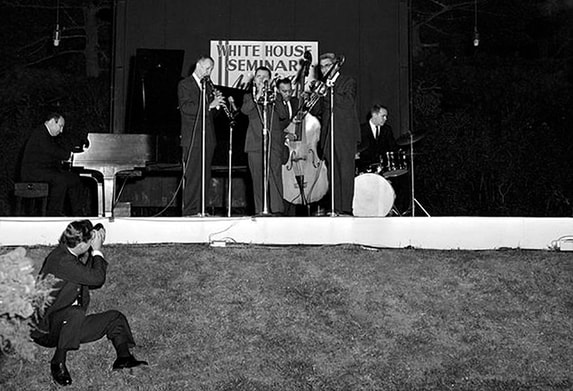
George Wein and the Newport All-Stars performing at the Sylvan Theater on August 28, 1962. Photo: Cecil Stoughton. White House Photographs. John F. Kennedy Presidential Library and Museum, Boston.

​The band played six tunes, a well-paced mix of swing-era standards, four up tempo, one change of pace, and a Pee Wee special. Wein announced the title of each tune:
​
Up “Undecided” (1938): 5 min.
Up “Indiana” (1917): 6 min.
“Blue and Sentimental” (1938):3 min.
Up “Crazy About My Baby” (1929): 4 min.
“Pee Wee’s Blues” (1930): 4 min.
Up “Saint Louis Blues” (1914): 6 min.

Solos were plentiful on the up tempos numbers with Kansas City style riffs backing the soloist.

Applause from the largely student audience was respectful—if not overly generous—after individual solos and at the conclusion of a song, and then at the close of “Pee Wee’s Blues,” it was lengthy and loud, no doubt helped along by George Wein’s initial setup that promised a historic moment: “Pee Wee’s going to play the blues on the Washington Monuments grounds!” Drummer Eddie Phyfe also drew a huge ovation at the finish of his drum break on “Saint Louis Blues.”[9]

Thanks to the splendid work of Library of Congress staff, especially Bryan Cordell of the Music Division (Recorded Sound), the Newport All-Stars segment once lost has now been found. The entire Kennedy White House 1962 Sylvan Theater concert can now be heard at the Library.
​
Picture
Take a listen if you can, and I’m sure you will agree that the All-Stars proved to be an excellent opening act for jazz headliners Brubeck and Bennett, whose hit tunes (“Take Five”) and (“I Left My Heart in San Francisco”) were well received by the youthful summer crowd.

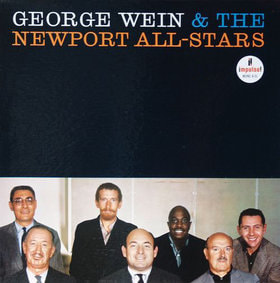
As previously mentioned, fans can listen to the Bennett/Brubeck segments on a Columbia CD. Additionally, George Wein and the core group recorded in studio on October 12, 1962, which is available on George Wein & the Newport All-Stars LP/CD (Impulse).

​

CODA
There were only two Kennedy White House jazz events, the one described above and the other by the Paul Winter sextet for 10- to 19-year-old children of diplomats and government officials held in the East Room on November 19, 1962. 

Interestingly, we have the music for both concerts, the former on Columbia CD (Bennett/Brubeck) and at the Library of Congress (Newport All-Stars), and for the latter, on Living Music CD (Paul Winter Sextet, Count Me In, 1962 & 1963).

There was only one other White House jazz event for which we have the music: President Nixon’s birthday extravaganza for Duke Ellington in the East Room on Blue Note CD: 1969 All-Star Tribute to Duke Ellington. 

And that’s that! 

How about all the other jazz events? For Presidents Johnson, Ford, Carter, Reagan, and the others? Isn’t it about time the music at the People’s House (as George Washington called it) is released to the people?

NOTES

  1. Whitney Balliett, Collected Works: A Journal of Jazz, 1954–2001 (New York: St. Martin’s Griffin, 2002), 174.
  2. Ibid., 76–77.
  3. Robert Hilbert, Pee Wee Russell: The Life of a Jazzman (New York: Oxford University Press, 1993), xiii.
  4. George Wein with Nate Chinnen, Myself Among Others: A Life in Music (Cambridge, MA: Da Capo Press, 2004), 184–86; 194. 
  5. Ibid., 183. 
  6. Ibid., 233.
  7. Photo caption “Joint’s Jumping on the ‘Hill,’” photographer Vic Casamento, Washington Post, Monday, June 18, 1962, page 1. 
  8. George Wein, Myself Among Others, 432–35; Robert Hilbert, Pee Wee Russell, 241.
  9. George Wein comments, tunes played, and crowd reaction transcribed by the author from the audio: White House Jazz Seminar, Sylvan Theater, White House, 1962-08-28 (digital ID: 2603586), Library of Congress, Washington, DC.​
​
3 Comments

Looking Back 50 Years: Notable Jazz Events/Albums of 1969

1/20/2020

2 Comments

 
Picture
The most notable jazz event of 1969—and one of the most notable in all of jazz history—was the Duke Ellington gala held at the White House on April 29. This six-hour event included a banquet, a 90-minute concert of 27 Ellington songs performed by an all-star jazz ensemble, and a jam session with dancing. Hundreds of guests attended the celebration, during which President Nixon awarded Duke the Medal of Freedom.
 
This was the first time the award was given to an African American and the first time it was given to a jazz musician. This gesture, at a time when jazz was not yet fully recognized as an art form, set the jazz arts community abuzz like never before. Not only did the medal go to the most respected, honored, and accomplished jazz musician in over four decades, but it was as if the award had gone to jazz itself, bestowed at the highest level of government. Greater recognition was bound to follow, and it did.
 
Jazz received its first federal grant in 1969, which grew tenfold over the next five years and also set the stage for jazz to receive significant grant money from reluctant foundations for the next ten years. Shortly thereafter, jazz was accepted as a fully recognized American art form.
 
And it all began at the Ellington tribute in the spring of 1969, well described by jazz critic Dan Morgenstern: “Though there were moments of appropriate solemnity, the tenor of the evening was one of cheerful warmth and friendly informality, set by the president himself.”

More in-depth information can be found in my book Ellington at the White House, 1969, and the recorded concert can be heard on All-Star White House Tribute to Duke Ellington, Blue Note (2002). 
​
Picture
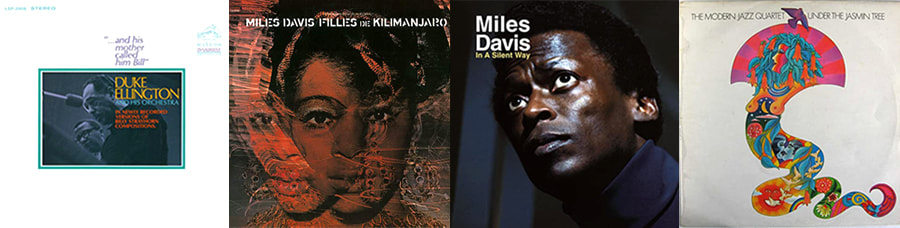
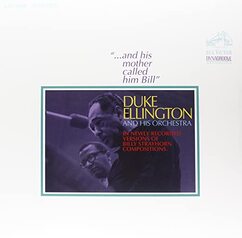
The “Year of Duke” continued. His orchestra came in first in DownBeat magazine’s critics and readers polls, and he topped those polls in the composer and arranger categories as well. Moreover, his album And His Mother Called Him Bill was voted the year’s best by critics and the year’s fourth best by readers.[1]
 
Mother Called Him Bill is the maestro’s homage to his long-term composer-companion, Billy Strayhorn, who passed in 1967. The record is notable for its celestial tracks by altoist Johnny Hodges, particularly in “Blood Count,” “After All,” and “Day Dream,” the latter a late-at-night, sob-in-year-beer favorite. Stray’s compositions brought out that special, sensuous Hodges sound. As singer Lillian Terry recently put it, “Heavens, when he blows those long, languid notes . . . it’s an actual caress.”
 
The flip side of the Hodges coin—the bluesy side—Billy also knew well, as illustrated by “Snibor,” “The Intimacy of the Blues,” and “Acht O’Clock Rock.”[2]
 
In the year 1969, DownBeat fairly embraced the avant-garde movement while also fully embracing rock. Regarding the former, reviews of new thing musician albums were well represented and, generally speaking, highly rated (there were exceptions, like altoist Lou Donaldson’s scorching article declaring it was a bunch of noise made by amateurs[3]).
  
For example, albums by Gunter Hamphill, John Carter and Bobby Bradford, Don Cherry, Archie Shepp, Pharoah Sanders, Ornette Coleman, Sonny Simmons and Prince Lasha, Albert Ayler, Roscoe Mitchell, and Joseph Jarman were all received. And, oh, the movement’s founding father, Ornette Coleman, was entered into the DownBeat Hall of Fame in 1969.
 
DownBeat had tippy-toed around rock in years past but dove deep into the music in 1969. Besides establishing a regular column for the first time (by Alan Heilnman), the magazine featured articles about the following rock musicians and groups, as well as reviews of their albums: Tim Hardin, Steve Miller Band, George Benson, Mike Bloomfield, Bob Dylan, Mothers of Invention, Blood, Sweat and Tears (BST), Ten Years After, and Chicago.[4]
 
The Newport Jazz Festival followed suit, inviting a slew of rockers to perform, including BST, Lighthouse (a BST clone), Ten Years After, Jethro Tull, Jeff Beck, Mothers of Invention, Sly and the Family Stone, and James Brown. In one respect it worked—the festival drew a larger crowd. But it wasn’t a jazz crowd; it included a sizable number of youthful, rowdier fans (think Woodstock), resulting in a host of security problems. Impresario George Wein concluded, “The kids destroyed the event and the experiment was a failure.” The Newport town council concluded, “No rock next year.”[5]
 
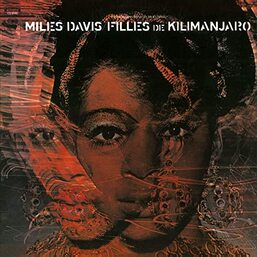
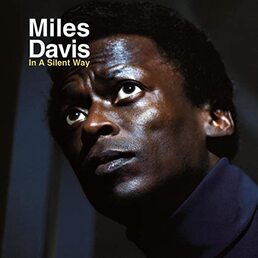
It was also the year of Miles Davis. DownBeat readers voted him jazzman of the year and best trumpeter and combo leader. They also voted his albums Filles de Killimanjaro (FDK) and In a Silent Way the year’s best and third best, respectively.[6]

Picture
Picture
While not fully appreciated at the time, these two stepping-stone albums represented Miles’s first breakaway from the hard bop aesthetic (and his occasional romantic excursions) that had begun with Walkin and continued from the first great quintet (Round Midnight) and sextet (Milestones and Kind of Blue) to the second great quintet (Miles Smiles and E.S.P.). His breakaway sound would soon be labeled jazz fusion, jazz rock, or electric Miles (Bitches Brew).

Interestingly, neither FDK nor In a Silent Way stirred much controversy at the time of their release—that would come later.

Paul Tingen notes the following regarding the FDK tracks:
​ 
“Petits Machins” has its roots in the second great quintet’s hard bop origins, even as it features a lyrical folk melody. “Toot de Suite” also has a graceful, folk-like melody but is underpinned with a straight rock rhythm. The “Filles de Killimanjaro” track has an almost pastoral feel and a strong African influence on the rhythms and a gorgeous theme. The solos and the simple chord changes are to some degree idiomatic to rock music. On “Stuff,” the quintet sounds as if it’s having fun experimenting with funk and soul influences without adding anything new.[7]
​
“Filles de Killimanjaro” and, to a lesser extent, “Toot de Suite” indicate for the first time a real integration of folk and rock influences, and no one got upset—many people enjoyed it. DownBeat readers loved FDK and selected it as their favorite album of 1969.

The quintet that recorded FDK consisted of Miles on trumpet, Wayne Shorter on sax, Chick Corea on piano, Dave Holland on bass, and Tony Williams on drums. (Replace Tony Williams with drummer Jack DeJohnette, and this group would have been called Miles’s “Lost Quintet,” a quintet that never made a studio recording). 

Cook and Morton describe In a Silent Way, the second stepping-stone album, as a collage using “found objects” put together with a view to the minimum details and coloration required to make an impact—the “found objects” being British guitarist John McLaughlin, Austrian pianist Joe Zawinul, whose “In a Silent Way” became a centerpiece of the album, and Columbia producer Teo Macero, who stitched repeats of certain recorded live studio passages back into the fabric of the music, giving it continuity and a certain hypnotic circularity. 

In effect, three new players of electric instruments (Chick Corea on piano, Joe Zawinul on piano and organ, and John McLaughlin on guitar) joined four members of the second classic quintet (Miles Davis on trumpet, Wayne Shorter on soprano sax, Herbie Hancock on electric piano, and Tony Williams on drums) to give the band a sound completely unlike any previous incarnation.[8] 

Producer Teo Macero’s post-production role was crucial to the outcome (quite unusual for jazz at the time). Teo edited two hours of recorded music and trimmed it with Miles to 27 minutes of original music. He then expanded it to 38 minutes (to fit two sides of a 12” LP) by repeating certain sections.[9]

Cook and Morton praise In a Silent Way as a beautiful album, touching and centered. The title piece and “Shhh/Peaceful” are among the most atmospheric recordings in modern jazz.[10] 

In a Silent Way became an important forerunner of ambient music. Not certain what to make of the album, the DownBeat reviewer awarded it three and a half stars.[11]
Picture


Another 1969 album of note featured the venerated Modern Jazz Quartet. Released on Beatles label Apple Records in 1968, Under the Jasmin Tree featured the lengthy three-part suite “Three Little Feelings” and “Exposure,” both poised structured fare with swinging elements, as well as two surprises: “The Blue Necklace” and “The Jasmin Tree,” both based on the Afro-Moorish rhythms of Morocco, with drummer Connie Kay and bassist Percy Heath front and center. 

On “The Blue Necklace,” a very active Kay rang his triangle, shook his jingle bells, and tappety-tapped his snare’s skin and rim alternately, and at times simultaneously, while Heath plucked a high-note, clave-like rhythm on his bass. 

On “The Jasmin Tree,” Heath held the bottom with a steady boom-boom-boom as Kay maintained a clack-clack-clack, sock cymbal clucking away underneath, a triangle keeping the pulse on top (instead of a ride cymbal), and—the coup de grâce—a tambourine gospel shaking that sounded like the quick one-two hand claps of a church choir.

​In the middle of this throbbing stew, John Lewis on piano and Milt Jackson on vibes twined their way through a folk-like ditty, stating the melody, comping, and soloing, first one then the other, back and forth. 

About three-quarters of the way through, the gospel-ish rhythm came to a halt, and a new but related melody (Moroccan folk song) was introduced, played in unison by piano, vibes, and bass. Following this interlude, it was back to the Moorish church, and the tune concluded as it began. 

DownBeat magazine awarded five stars to this welcome departure from a much-revered group, which, by the way, also played the White House in 1969.[12]


NOTES


  1. Critics Poll, DownBeat magazine, August 21, 1969; Readers Poll, DownBeat magazine, December 25, 1969.
  2. Edward Allan Faine, “Faine Favorites: Top 10 Alto Sax Albums,” Jazz Blog, August 31, 2018. 
  3. Lou Donaldson, scorching review of new thing music, DownBeat magazine, February 1969.
  4. All issue review of both avante-garde and rock music coverage, DownBeat magazine, January 9–December 25, 1969.
  5. Coverage of Newport Jazz Festival, DownBeat magazine, August 21, 1969.
  6. Readers Poll coverage of Miles Davis, DownBeat magazine, December 25, 1969.
  7. Paul Tingen, Miles Beyond: The Electric Explorations of Miles Davis, 1967–1991 (New York: Billboard Books, 2001), 46. 
  8. Richard Cook and Brian Morton, The Penguin Guide to Jazz on CD, 7th ed. (NewYork: Penguin Books, 2004), 408–409. 
  9. Tingen, Miles Beyond, 60.
  10. Cook and Morton, Penguin Guide, 66.
  11. DownBeat magazine, October 1969.
  12. Edward Allan Faine, The Best Gig In Town: Jazz Artists at the White House, 1969–1974 (Takoma Park, MD: IM Press, 2015), 27–32. ​
2 Comments

That Anniversary Year 2019: Celebrating Four Jazz Centenarians

12/31/2019

1 Comment

 
Picture
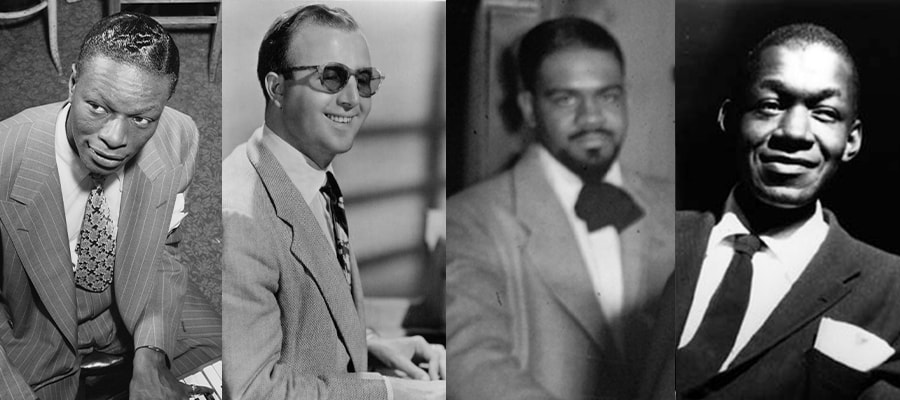
Left to right: Nat King Cole, George Shearing, Al McKibbon, and Herbie Nichols
The 100th anniversary jazz birthday calendar for 2019 has three fewer than for 2018—15 total centenarians, oldest to youngest as follows:

Herbie Nichols, Al McKibbon, Israel Crosby, Snooky Young, Buddy Morrow, Nat King Cole, Mercer Ellington, Lennie Tristano, Benny Harris, Ella Johnson, George Shearing, Art Blakey, Anita O’Day, Hall Singer, Babs Gonzales.[1]

Below, I spotlight four jazz legends from this group.
​
​

Nat King Cole

Picture
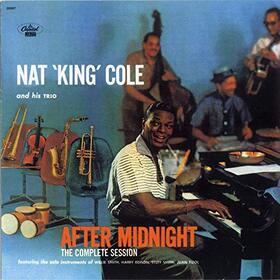
Of all Nat King Cole’s signature songs and classic albums, there is one album that is almost universally adored in the jazz community (sadly, less so with the general public), and that is, as Gene Rizzo characterized it, the eternally hip After Midnight (1957).

In the June 2004 issue of DownBeat magazine, a diverse group of 73 jazz singers (21 men, 52 women) were asked to name their top all-time favorite jazz vocal albums. The top 30 were listed; Midnight placed 12th. (Johnny Hartman and Frank Sinatra, the only higher-placed male singer albums, 2nd and 6th, respectively).[2]

In song historian Will Friedwald’s opinion, Midnight is a masterpiece, one of the great jazz vocal albums of all time, and I agree. Interestingly, and surprisingly, it is the only one of Cole’s original albums where he both sang and played piano all the way through. Moreover, his performance was never more free, or loose, like a man on a lark at a jam session with nothing to prove. Friedwald has told us how this gem came about:
​
[Nat and [his pal, trumpeter Harry “Sweets“ Edison] were at a [Dodgers baseball] game in August 1956 and they were overjoyed when [their] team . . . won, so much so that they had to let off steam by playing. Four calls were then made, first to Cole’s producer Lee Gillette to arrange for studio time at the Capitol Tower, and then to three regular members of his working trio, guitarist John Collins, bassist Charlie Harris, and drummer Lee Young. Upon arrival at the tower, Cole, Edison, and the trio quickly and exuberantly laid down five masters on songs they already knew very well.[3]

The first session was completely spontaneous with Cole, his standard rhythm section and baseball buddy Edison, the most recognizable trumpet voice in jazz—only one note and you know it’s Sweets. Nat played and sang songs already in his repertoire “Sweet Loraine,” “It’s Only a Paper Moon, “Route 66,” and “You Can Depend on Me.” 

The songs had been previously recorded in other contexts, of course, and here they were expanded with more and longer solos—jam session style—exactly what Cole wanted. Nat and producer Gillette were delighted with the results and decided to turn the pianist’s impromptu jam into an album project—12 more songs over three more sessions, each with a different guest soloist.

Next up, Willie Smith, a swing era alto saxophonist second only to Duke’s Johnny Hodges. For this session, Cole edged off his jam session perch a touch and recorded newer material: “Don’t Let It Go to Your Head,” “You’re Lookin’ at Me,” and “I Was a Little Too Lonely (And You Were a Little Too Late),” the latter written by Ray Evans and Jay Livingston, the tuner pair responsible for Nat’s breakout hit “Mona Lisa.” The session ended on a jam session favorite with Nat and Willie stretching out on a finger-snapping “Just You, Just Me.”

For the third session, Cole wanted a Latin tinge and brought in Cuban percussionist Jack Constanzo and Ellington boneman Juan Tizol, composer of “Caravan,” which they dutifully played and followed it with the perfect companion piece “The Lonely One.”

Constanzo sat out while Cole and Tizol delivered the best slow ballads on the album: “Blame It on My Youth” and “What Is There to Say.” Freidwald rhapsodized: “Cole has never been more convincingly romantic, and he’s brilliantly supported by both Tizol and his own piano playing. As an interpreter of great love lyrics, the King takes a royal back seat to no one.”

The last session’s four tracks featured the “sainted collaboration” (Friedwald’s term) of Nat with grand swing era violinist Stuff Smith. They teamed up on a laid-back “Some-times I’m Happy,” “I Know That You Know” at race-horse tempo, with ripping piano-violin exchanges, a moderately swinging “When I Grow Too Old to Dream,” and a relaxed treatment of “Two Loves Have I.”

At the time of its first release, Midnight was a one-of-a-kind album, and it has remained as such. Nat King Cole never worked with a small jazz combo of that variety again.

CODA
Comments accompanying the Midnight 12th-place finish:

Grady Tate: “We know he is a genius at the piano but what he does vocally is unbelievable. One can understand each and every word he sings and the phrasing is impeccable. Nat set such a high standard for male singers.”

Tuey Connell: “The juxtaposition of the bop-leaning piano playing and his conversational delivery entices and challenges the listener at the same time.”

John Pizzarelli: “An amazing combination of spontaneity and arrangement. Everybody’s contribution from Lee Young’s drumming and John Collin’s guitar to Sweet Edison’s trumpet and Stuff Smith’s swinging violin perfectly compliment Nat’s swinging ease.”
​

George Shearing/Al McKibbon

Picture
​Born blind in London, England, young George began pecking out tunes on the piano at age three. His handicap and precocious talent led to formal training in classical piano and theory. He rejected university scholarships in favor of working in neighborhood pubs that soon expanded to engagements at top London supper clubs, and guest spots on BBC radio. 

During WWII, Shearing met American jazz musicians (e.g., Fats Waller, Coleman Hawkins) while they were touring. They assured him of great success in the US. George crossed the pond to New York City, where he began to attract attention on the beboppin’ 52nd Street. ​

​Gene Rizzo, author of The Fifty Greatest Jazz Pianists of All Time—who ranked Shearing ninth—continued the story from there:

In ’49, Shearing formed his famous quintet–a unique blend at the time of piano, vibes [Marjorie Hyams], guitar [Chuck Wayne], bass [John Levy], and drums [Denzil Best]. It became one of jazz’s biggest attractions. The quintet’s tight arrangements were based on the locked-hands style of Lionel Hampton’s pianist, Milt Buckner. Its formula, easily atomized, but less easily executed at fast tempos, featured the piano voiced in four-part chords. The right hand’s top, or melody voice, was doubled by the left hand within an octave. The vibes played in unison with the upper melody, the guitar with the lower.[4]

The initial lineup responsible for the unique “Shearing Sound” recorded for Discovery, Savoy, and MGM. The result—the nigh impossible—a hit jazz record: the immensely popular “September in the Rain,” which sold over 900,000 copies![5] Other not-as-popular singles followed, “I Remember April,” for example. 

George continued to soak up the sounds of bebop piano masters Bud Powell and Hank Jones, and the newly arrived Latin rhythms (Latin jazz). He got his first taste of Latin music at the Club Clique in midtown Manhattan when he played opposite the Machito orchestra. He later reminisced: “The sounds were incredible, the rhythm complex, the bass lines were so interesting. I wanted to record Latin music, but the opportunity did not appear until I met bassist Al McKibbon, who knew the roots of Afro-Cuban music.”[6]
​
Detroit-born Al McKibbon—who shared the same birth year with Shearing—moved to New York in the 1940s. In 1947 he joined Dizzy Gillespie’s big band and played with Cuban percussionist Chano Pozo. Al learned the fundamentals of Afro-Cuban drumming from Pozo and played on the original recording of Dizzy’s “Manteca.”

Later he participated in the recording Birth of the Cool with Miles Davis. Particularly adept at blending Latin rhythms with straight jazz, McKibbon was at the heart of the Shearing Quintet from 1951 to 1958.[7]

In September 1953, the George Shearing Quintet, which now included Cal Tjader on vibes, Belgian-born ”Toots” Theilemann on guitar, Bill Clark on drums, Al McKibbon on bass, Catalino Rulon on maracas, and Candido Camero on bongos, recorded an album for MGM. Shearing was not pleased with his piano performance. McKibbon suggested he listen to the recordings of Noro Morales and Joe Loco so he could learn to ad-lib the Cuban montuno. 

Shearing later said, “My ears became attuned to the authentic Afro-Cuban music thanks to AL McKibbon, the Machito orchestra, and Armando Peraza and Willie Bobo.” It was the Afro-Cuban whisperer McKibbon who suggested Shearing hire Peraza, who was regarded as a true virtuoso, unequaled as a bongo player and capable of amazing solos on conga drums. 

Peraza joined the Shearing band in 1953, an association that would last eleven years.  McKibbon declared, “When Armando came into the band, that was a new day.”[8] 

​Indeed, as Peraza later recalled:
​
I used to sit down with Shearing and sing melodies to him. He would play them on the piano and develop an arrangement. He was blind but he could see my ideas, my dream. Shearing said he loved my harmonic concepts. He allowed me to compose, to create.[9]
​
Shearing recorded a number of memorable albums of jazzed-up boleros and mambos. The first one with Peraza and McKibbon, Latin Escapade (1956), sold 80,000 copies, a milestone for Latin jazz! Other albums followed: Latin Affair (1958), Mood Latino (1961), and Latin Rendezvous (1962).[10]

These albums contributed to the general acceptance of the music, along with the quintet’s appearances at jazz clubs, supper clubs, college campuses, and spaces generally off-limits to other jazz groups.

​Between 1956 and 1963, I attended five shows: three in Cleveland, Ohio (two at the Modern Jazz Club, one at Public Hall) and two in Columbus, Ohio (one at the Kontiki Polynesian Restaurant, the other at a downtown hotel). Each set featured a Latin segment with Armando Peraza front and center. 

Besides being an outstanding classical and bebop-influenced jazz pianist and the leader of an instantly recognizable, one-of-a-kind jazz quintet, George Shearing deserves plaudits for his early contribution to, and promotion of, Latin jazz, a genre that would attain significant popular status in the 1960s and beyond.
​
​

Herbie Nichols

​
​A belated shout-out to a most deserving pianist-composer: Herbie Nichols. Jazz critic Gary Giddins writes:
​

[While] an incontestably modern and unique voice, and despite his own fabled persistence, he was only able to document four tunes for Savoy (1952), two albums for Blue Note (1955–56), and one for Bethlehem (1957) . . . He wrote over a hundred songs, but only 30 were recorded by himself, another three by Mary Lou Williams, and one by Billie Holiday.[11]
 
Pianist Frank Kimbrough marveled: “It’s bizarre. He wrote twice as many tunes as Thelonious Monk, yet he’s always been famous for being unknown.”
 
Well, perhaps not so much now. Nichols was inducted into the DownBeat Hall of Fame in 2017, more than five decades after his death from leukemia.[12]

NOTES

  1. ​Jazz Birthday Calendar, 1919.​
  2. Frank-John Hadley, “30 All-Time Favorite Jazz Vocal Recordings,” DownBeat magazine, June 2004, 48.
  3. Will Friedwald, The Great Jazz and Pop Vocal Albums (New York: Pantheon Books, 2017), 69–75.
  4. Gene Rizzo, The Fifty Greatest Jazz Pianists of All Time (Milwaukee, WI: Hal Leonard Corporation, 2005), 35–36. See also additional confirming source: Len Lyons, The Great Jazz Pianists: Speaking of Their Lives and Music (New York: Quill, 1983), 98–100.
  5. Raul Fernadez, Latin Jazz: The Perfect Combination (San Francisco: Chronicle Books, 2002), 82.
  6. Ibid., 83.
  7. Ibid., 82–85.
  8. Ibid., 83, 77, 82.
  9. Ibid., 76.
  10. Ibid., 82.​​
  11. ​Liner Notes, Gary Giddins, Herbie Nichols--The Bethlehem Years, Bethlehem Records, LP, BCP 6026, 1976.
  12. Herbie Nichols, “Rightful Honor,” DownBeat Magazine, August 2017, 36.
​
1 Comment

Portrait of an LP-Era Jazz Fan: Part 2

11/28/2019

4 Comments

 
Jazz LP Collection
A sample from Edward Faine's jazz LP collection.
In the first part of this blog series, I talked about the collection of 640 jazz LPs I acquired in the 1954–1984 time frame and how I discovered that half of them consisted of multiple buys from 36 artists—30 from trumpeter Miles Davis down to 5 each from saxophonists Chico Freeman and Oliver Lake.

Here, I look at the remaining half of my collection and discuss several of the singular, transcendent albums. They're listed in no particular order.


Picture
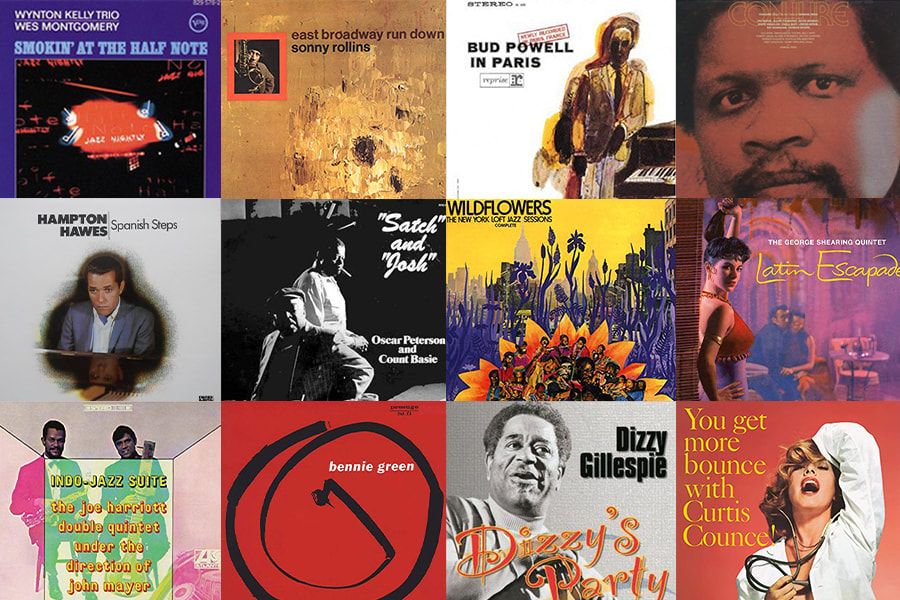
Wynton Kelly Trio | Smokin’ at the Half Note | Verve
​
For Wes Montgomery, 1966 was a breakout year. The most influential jazz guitarist since Charlie Christian, Montgomery was known for his thumb plucking and innovative approach to playing two notes at the same time an octave apart.

​Interestingly, the year Montgomery crossed over to the pop market with his R&B hit “Goin’ out of My Head,” he recorded what I (and many others) believe to be his best jazz album with the Wynton Kelly Trio (Miles Davis’s rhythm section at the time).

From the opening 13-minute “No Blues” to “Unit 7” to “Four on Six,” the Kelly Trio mirrored Montgomery’s insistent drive throughout. Smokin’ indeed!


Picture
Sonny Rollins | East Broadway Run Down | Impulse!

Rollins surprised many with his 20-minute title track featuring his tenor and extracted mouthpiece, along with John Coltrane’s rhythm section bassist Jimmy Harrison and drummer Elvin Jones with trumpeter Freddie Hubbard (on one track).

At the time, many people thought Sonny was about to join “New Wave” pioneers Ornette Coleman and Don Cherry because of the use of just a mouthpiece. But, no, it was Rollins simply saying he could play free if he wanted to, and this was the way it should be done. I agreed, wishing he had done more of it.


Picture
Bud Powell | Bud in Paris | Xanadu

Here is recorded proof that pianist Powell’s abilities were still intact well into the last decade of his life. Maybe not on a par with his superhuman playing of the 1940s, but mighty close.

​This album presents the cream of his performances between 1959 and 1961, including a driving duet with expat tenor man Johnny Griffin on “Idaho” and “Perdido,” both of them grunting their own throaty comments as the music swirls and swoops. Bud, in a trio setting with bebop drummer Kenny Clarke, essays his own compositions—“John’s Abbey” and “Buttercup”—showcasing his firm touch and unceasing swing at both medium and up tempos. This is a historically significant album.


Picture
​Kip Hanraahan | Conjure | American Clave

Kip Hanrahan, not exactly your well-known jazzer, has taken a rather eclectic approach to music, regularly assembling diverse groups of Latin, rock, folk, and jazz musicians (and poets) in the studio and recording them for his own American Clave label. 

Conjure contains a track with a most unlikely title—“The Wardrobe Master of the Universe”—sung by folk artist Taj Mahal, a bouncy tune that received extensive airplay on my home stereo. The ensemble, with Carla Bley on piano, sets up an infectious Latin-popping groove from the get-go. After Mahal’s vocal, David Murray enters with the most concise R&B, jazz, funky avant bop solo imaginable, all over his horn top to bottom—that was obviously improvised, but so perfect you’d think it had been scored and then woodshedded for years!


Picture
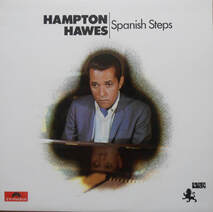
​Hampton Hawes | Spanish Steps | Black Lion

​Post-bop pianist Hawes recorded a lively set in Paris accompanied by the two expats Jimmy Woode (bass) and Arthur Taylor (drums). Two tracks stand out, the Hawes-composed jazz waltz “Sonara” and the lovely Richard Rodgers ballad “My Romance.” The former, buoyed by a loose and fluid rhythm section, is the most infectious jazz waltz ever recorded, bar none.

The lengthy “My Romance” is a Hawes favorite, a ballad that can be played as such or at a medium tempo. He does both here and even adds a ringing block chord segment. Simply gorgeous. There is, as far as I know, no better jazz piano instrumental treatment of this song.


Picture
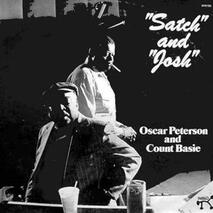
Oscar Peterson | “Satch” and “Josh” | Pablo
​
The “Satch” and “Josh” are none other than Oscar Peterson and Count Basie. Two dissimilar pianists could not have been found on the planet to cut a duo record, backed by a superb rhythm section: Freddie Green (guitar), Ray Brown (bass), and Louis Bellson (drums).

​Peterson’s technique is complex and prolific. Basie’s is simple and sparse. Peterson is arabesques, fluttering appoggiaturas, and grace notes, and Basie is bare bones. And does it ever work. Why? Despite differences, they both share an atomic sense of time and a fathomless understanding of the blues. In fact, 6 of the 10 songs on the album are jointly composed blues, and the rest are standards. A more delightful, one-of-a-kind record is not to be had. 


Picture
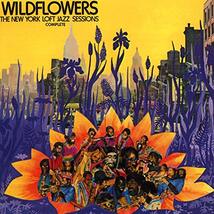
Loft Jazz Artists | Wildflowers 1–5 | Douglas
​

Seldom in jazz history has a new jazz movement been so thoroughly documented as on the Wildflower series. Thirty-two performances by 60 new wave musicians were recorded at the loft home of saxophonist Sam Rivers over seven May nights in 1976.

The music resulted in five separately issued LPs played by a veritable who’s who that included Hamiett Bluiett, Charles Brackeen, Anthony Braxton, Marion Brown, Dave Burrell, Anthony Davis, Ola Dura, Julius Hemphill, Fred Hopkins, Oliver Lake, Byard Lancaster, George Lewis, Jimmy Lyons, Ken McIntyre, Roscoe Mitchell, David Murray, Sonny Murray, Sam Rivers, Henry Threadgill, and Abdul Wadud.

 
Please forgive the mostly unrecognizable name list—none were household names at the time, even in the jazz community. But that is the point here: this was the first assemblage of wildflowers intent on adding yet another branch to the growing jazz tree.


Picture
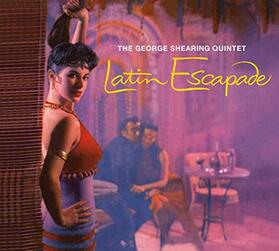
George Shearing | Latin Escapade | Capitol
​

As percussionist Chano Poso was to Mario Bauza and Dizzy Gillespie, Armando Peraza was to pianist George Shearing on this historic latin jazz album. Peraza was featured on congas and other percussive instruments at every Shearing quintet performance for over 12 years.

​My young jazz ears, tuned to odd time signatures and ethnic rhythms from the get-go (don’t know why), delighted in listening to the rhythmic sounds of Armando on this LP, as well as at five Shearing club performances I attended from 1955 to 1961.


Picture
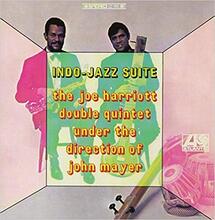
Joe Harriott/John Mayer | Indo-Jazz Suite | Atlantic

Yet another time signature mash-up—the first time in history Western musicians (all from the UK by the way) and Indian musicians played together from a written score. Improvising by both sets of musicians took place, especially by alto player Joe Harriott, who played his own brand of free jazz.

​Not all fans and critics took to the fusion, but I did. Maybe a little stilted at times, but always exciting and swinging. As Mayer proclaimed, “World Music began here,” and who is to say otherwise.


Picture
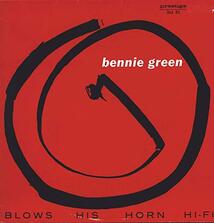
Bennie Green | Blows His Horn | Prestige
​

A trombonist most prominent in the ’50s and ’60s, Green was not really a skilled technician. He often relied on a satchel of repetitive licks, but what licks and what a sound, a blues-drenched Tommy Dorsey sound, less vibrato than Dorsey, with a smooth, high-register wail that split the differences between swing, R&B, and bebop. Though many of his albums are out of print, you can still find this early outing. No other like him, ever.


Picture
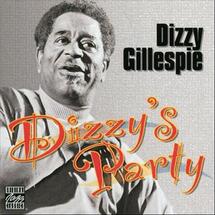
Dizzy Gillespie | Dizzy’s Party | Pablo

In the 1970s Gillespie hooked up with producer Norma Granz on his newly formed Pablo label. After several pairings with jazz masters from his era, Diz implored Granz to put aside all these “history” recordings and let him record something “modern.”

The result: 
Dizzy’s Party, a hip-shaking Latin jazz album for funk fans, with two electric guitars, drums, and Brazilian percussion to support trumpet and saxophone. Granz should have released a single from what he called Dizzy’s dance album. I saw the band twice, and it was a party.


Picture
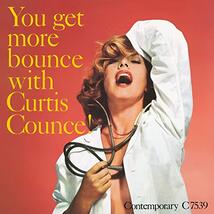
Curtis Counce | More Bounce with Curtis Counce | Contemporary

The West Coast–based Counce group was one of the great quintets of the 1950s: Curtis on bass; the underrated Carl Perkins on piano; Frank Butler, the cleanest, most impeccable sounding drummer of the era; and two journeymen, Harold Land on tenor sax and Jack Sheldon on trumpet. 

Bounce is their standout album. The best track: “Stranger in Paradise” from the Broadway show Kismet. The band never swung harder than on this medium tempo romp, but the standout solo belongs to Sheldon, who overcame his technical limitations (obvious on the other tracks) to produce a perfectly logical and memorable solo.

​Had Sheldon played at this level consistently, he would have been a household jazz name, along with other notable middle-register trumpeters like Chet Baker, Miles Davis, and Art Farmer.


Picture
Monk Tribute | The Way I Feel Now | A&M

Here is yet another eclectic album where rock, pop, and jazz musicians pay tribute to Thelonius Monk. The Carla Bley track features her 15-piece big band with guest Johnny Griffin on tenor saxophone doing their version of Monk’s quirky “Mysterioso.”

The cut begins with the band in full force sounding like a tool and die shop clanking away at full capacity and melds into a gorgeous contrasting counter theme, a Johnny Griffin solo, a routine but faux ending, a piano trio interlude featuring Bley, and then the REAL ENDING, which is what makes this track so memorable—the band laying down sumptuous chords as Griffin soars up and down his instrument sounding like a baritone, tenor, and alto all rolled into one.

​The finale makes me think of other rousing endings: Stravinski’s 
Sacre Du Temps and Mousorgsky’s Pictures at an Exhibition.


Picture
Charles Sullivan | Genesis | Strata East

Most jazz fans haven’t heard of New York–based trumpeter Charles Sullivan. Few records to his name, that’s for sure, but on this one, there is a magical moment, a 30-second coda to “Now I’ll Sleep,” a song with a rather depressing lyric sung by a young Dee Dee Bridgewater.

As the song seemingly ends, the recording engineer switches to reverb (the click is heard), and Sullivan switches from trumpet to flugelhorn for a lilting improvised duet with Ms. Bridgewater. Dee Dee’s wordless vocal intertwines around Sullivan’s rich line, first mirroring then contrasting—like a double-helix strand of DNA.

​On the same album, another magical duet, this time with pianist Onaje Allan Gumbs on “Good-Bye Sweet John,” a musical interlude repeated three times with increasing volume and bravura—a china-lovely chamber piece evoking simultaneous feelings of sadness and triumph. Countless times I’ve returned home, slapped on the disc, and dropped the needle to hear these two romantic snippets.


Picture
Grachan Moncur III | New Africa | Actuel

One of the first trombonists to explore free jazz, Moncur presided over a recording session with a to-die-for lineup: altoist Roscoe Mitchell, drummer Andrew Cyrille, pianist Dave Burrell, and tenor Archie Shepp. One track is transcendent, the 12-minute “When,” the reason why this album should be in every fan’s collection, whether a free jazz devotee or not.

After stating the riff-like theme, Moncur improvises variations on his riff before passing the baton to Mitchell, who in turn elaborates on the trombonist’s excursions. With his Texas R&B roots in mind, Shepp expertly weaves among his predecessor’s instrumental statements.

Excellent solos all, but what makes the frontline commentary delicious is the rhythmic underpinning: Burrell’s steady vamping piano and Cyrille’s churning cymbals produce a recognizable forward motion. In simpler words, this tune swings!

​Several decades ago, I hosted a radio program for several months and my opening theme song was “When.”


Picture
David Amram | Havana/New York | Flying Fish
​

In the second half of the 1970s, former President Carter, seeking a thaw in US-Cuban relations, sent jazz, rock, and salsa musicians to Cuba to jam with their Cuban counterparts, often producing collaborative recordings. This LP, organized and produced by multi-instrumentalist David Amram, is one such effort, and it’s a fine one.

​Most prominently, it introduced two unknown and exciting Cuban jazz voices—trumpeter Arturo Sandoval and saxophonist Paquito D’Rivera–—to the American public. Soon after, while on tour, both Arturo and Paquito defected to the US, began touring and recording albums of their own, and became US citizens. Arturo Sandoval received the Medal of Freedom from former President Obama in 2013. Viva our cultural exchange programs!


Picture
Roland Kirk | 3-Sided Technicolor Dream | Atlantic

What to make of The Case of the 3 Sided Dream in Audio Color (full title)—a double LP with side 4 blank, three-minute-long Kirk-spoken ramblings between tracks, two versions of three songs, and Kirk’s usual accomplished playing of two to three instruments at once? Sounds quirky, but it’s not.

​With contributions from keyboardists Hilton Ruiz and Richard Tee, baritone saxophonist Pat Patrick (on holiday from Sun Ra), and drummer Steve Gadd, it’s downright groovy, possibly Kirk’s most broadly accessible album.


Picture
The Piano Choir | Handscapes | Strata East

No question, here is a jewel produced by a seven-member jazz piano choir (Stanley Cowell, Nat Jones, Hugh Lawson, Webster Lewis, Harold Maybern, Danny Mixon, and Sonelius Smith).

Recorded live in concert, this two-LP album captured a seemingly unimaginable and otherworldly aural experience. Or as Phyl Garland of 
Ebony described it, “The torrent of sound springing from70 fingers is so powerful and majestic as to be unlike anything one has ever heard.” The sound produced, especially on the lengthier, driving all-hands-on-deck numbers, is orchestral. On other no less enjoyable tracks, there is at least a sense of familiarity—a theme statement followed by sequential solos by each choir member as in Monk’s “Straight No Chaser.” A stunning album.


Picture
Woody Herman | Woody Herman–1963 | Phillips

Following on the heels of the big band revival of the late 1950s led by Duke Ellington, Count Basie and Maynard Ferguson, Herman launched the Fourth Herd in 1963, one of several bands he fronted over his musical career.

This latest edition featured aggressive soloists (Bill Chase, Sal Nistico, Phil Wilson) and current jazz standards “Watermelon Man” (Hancock), “Better Get It in Your Soul” (Mingus), and “Days of Wine and Roses” (Mancini). I saw this flat-out exciting aggregation at Basin Street East in New York City on my honeymoon.


Picture
John Handy | At Monterey Jazz Fest | Columbia

A standout live performance by altoist John Handy and his unusual group: violin (Mike White), guitar (Jerry Hahn), bass (Don Thompson), and drums (Terry Clark).

It’s hard to say why this music is still so fresh and mesmerizing. It was novel, for sure, violin and alto, and guitar, but hey, this was the mid-’60s, novelty had been in vogue since the late ’50s. Sounded wonderfully alien to me, peculiar jazz harmonies some said, yet grounded in familiar jazz rhythms. Hard driving with group cohesiveness at its core, this was a memorable, one-of-a-kind performance.


Picture
Carla Bley | Escalator Over the Hill | JCOA   
  

The Jazz Composers Orchestra Association (JCOA) was formed by Michael Mantler and Carla Bley to give avant-garde jazz musicians an opportunity to play large, extended compositions normally not economically or artistically viable.

The JCOA tapped the likes of trumpeter Don Cherry, trombonist Grachan Moncur III, violinist Leroy Jenkins, pianist Cecil Taylor, trombonist Roswell Rudd, and trumpeter Clifford Thorton to each create lengthy compositions to record. The best-known project, however, remains the massive opera 
Escalator over the Hill, produced by Michael Mantler, book by Paul Haines, music by Carla Bley.

Encapsulated in a three-LP box set with illustrated playbill, 
Escalator was performed by some 40 well-known American and European new wave musicians with contributions from pop stars Jack Bruce, Linda Ronstadt, and Viva. Although not designed for wide audience appeal, this monumental work stands as a defining artifact of that overly ambitious and optimistic decade, the 1960s.
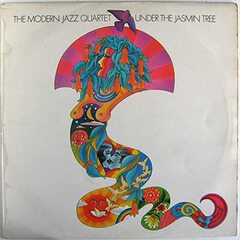
 
These are but a tiny few of the exceptional treasures from my jazz LP collection. Nonetheless, I think you’ll agree with my conclusion from part 1: Over a 30-year period beginning in 1954, I was a fan with eclectic tastes, preferring a diverse mix of traditionalists (Powell, Green, Gillespie) and avant-garde musicians (Grachan Moncur III, Loft Jazz Artists, Carla Bley).
 
Thank you for accompanying me on my trip down memory lane. 


4 Comments
<<Previous
Forward>>
    Picture
    Picture

    BUY NOW

    Picture

    BUY NOW


    EMAIL SIGNUP
    Receive news of upcoming blogs and events.
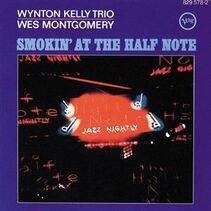

    Most Popular

    Music Blogs 2015–2023
    Business Advice from Miles Davis
    Miles and Me at the Modern Jazz Club

    Categories

    All
    Album Review
    Book Review
    Ellington
    Film Review
    Guest Post
    Jazz Albums
    Jazz History
    Jazz Musicians
    Music History
    Musicians
    Nixon
    Top 10 Jazz Albums

    Archives

    August 2023
    July 2023
    May 2023
    April 2023
    March 2023
    February 2023
    January 2023
    December 2022
    November 2022
    October 2022
    September 2022
    August 2022
    July 2022
    June 2022
    May 2022
    April 2022
    March 2022
    February 2022
    January 2022
    December 2021
    November 2021
    October 2021
    September 2021
    November 2020
    October 2020
    September 2020
    August 2020
    July 2020
    June 2020
    May 2020
    April 2020
    March 2020
    February 2020
    January 2020
    December 2019
    November 2019
    October 2019
    September 2019
    August 2019
    July 2019
    June 2019
    May 2019
    April 2019
    March 2019
    February 2019
    January 2019
    December 2018
    October 2018
    September 2018
    August 2018
    July 2018
    June 2018
    May 2018
    April 2018
    March 2018
    February 2018
    January 2018
    December 2017
    November 2017
    October 2017
    September 2017
    August 2017
    July 2017
    June 2017
    May 2017
    April 2017
    March 2017
    February 2017
    January 2017
    December 2016
    October 2016
    September 2016
    August 2016
    July 2016
    June 2016
    May 2016
    April 2016
    March 2016
    February 2016
    January 2016
    December 2015
    November 2015
    October 2015
    September 2015
    August 2015
    July 2015
    June 2015

    RSS Feed


FAINE BOOKS

Home  About  Books  Stories  Blog  Contact

Copyright © 2023 Edward Faine. All Rights Reserved.
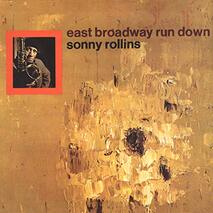
Proudly powered by Weebly

BACK TO TOP

© 2021 FaineBooks

© DivTag Templates Ltd | All Rights Reserved